
8 April 2026 Amber Huff
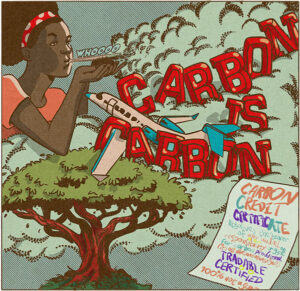
Myth: Carbon is Carbon
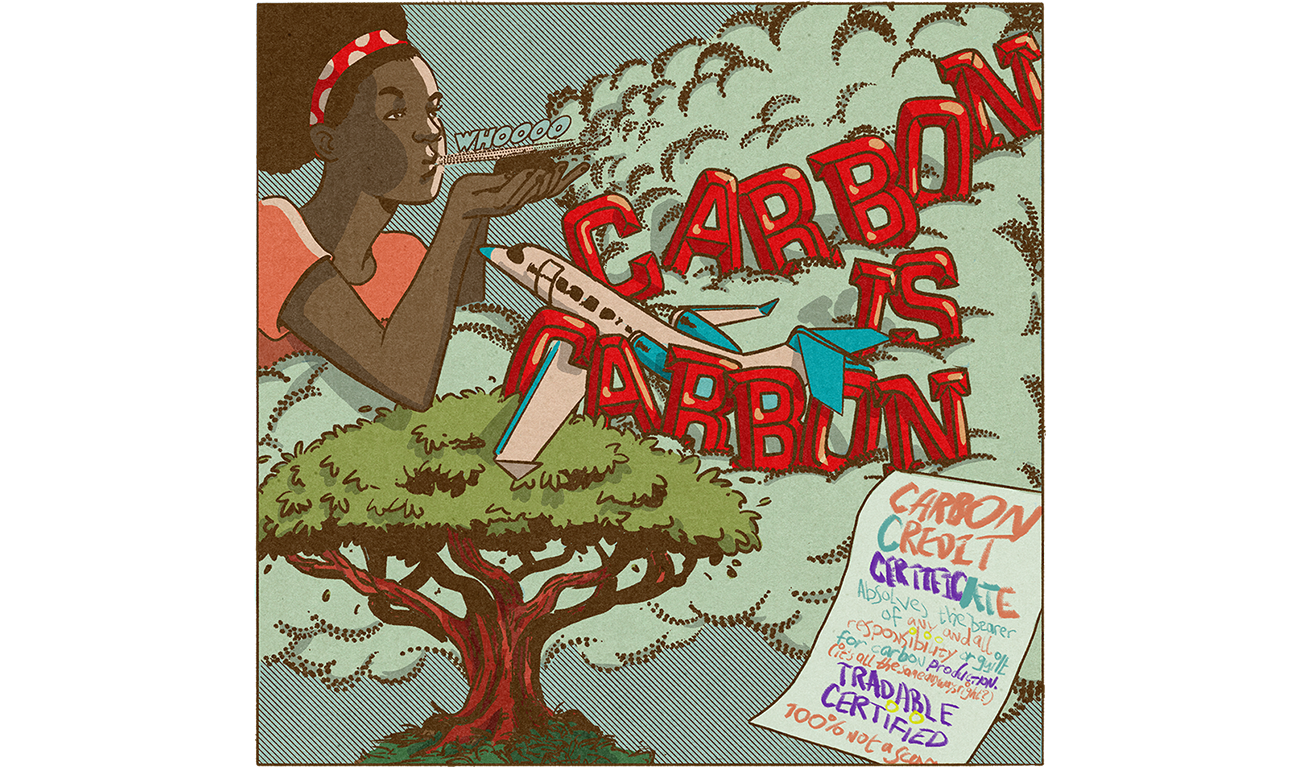
There is a powerful myth at the heart of global carbon markets: the deceptively simple idea that ‘carbon is carbon’.
We learn in school that this thing called ‘carbon’ is one of the most common chemical elements on the planet, part of the biogeochemical and ecological processes that are the basis of earthly life. But in the age of global climate disruption, ‘carbon’ has become something… more.
It has taken on new meanings and new, strange and highly abstract forms. These reflect powerful ideas about markets, sustainability and nature that shape the architecture, logics and outcomes of climate action at multiple scales. The power of this myth ripples across landscape interventions, national environmental frameworks, corporate sustainability strategies, international climate cooperation and global climate finance itself.
In this essay, we explore this myth, why it matters and how it shapes challenges and risks encountered as we confront climate change, channel climate finance, and seek to achieve just climate futures.

In the late eighteenth century, the French chemist Antoine Lavoisier experimentally inferred that diamonds and charcoal are composed of the same ‘simple substance’. He called this substance carbone – a name that would become a referent for diverse and transient forms and processes through which matter and energy circulate on Earth.
Sticky, shapeshifting, moving across atmosphere, soils, oceans, rock and living bodies, enmeshing interconnected processes, what we call ‘carbon’ is captured by the tissues of living things and, over vast geological time scales, becomes locked away in carbonate rocks like limestone and hydrocarbon compounds that are the basis of fossil fuels – coal, oil, and natural gas.
Industrial globalisation has set it free. In less than a century, the large-scale extraction and combustion of fossil fuels has released carbon atoms that have been bound up in these molecules over millions of years. This rapid unbinding has powered the expansion of global value chains and the modern systems and institutions that sustain them, even as it has driven profound – and profoundly uneven – consequences.
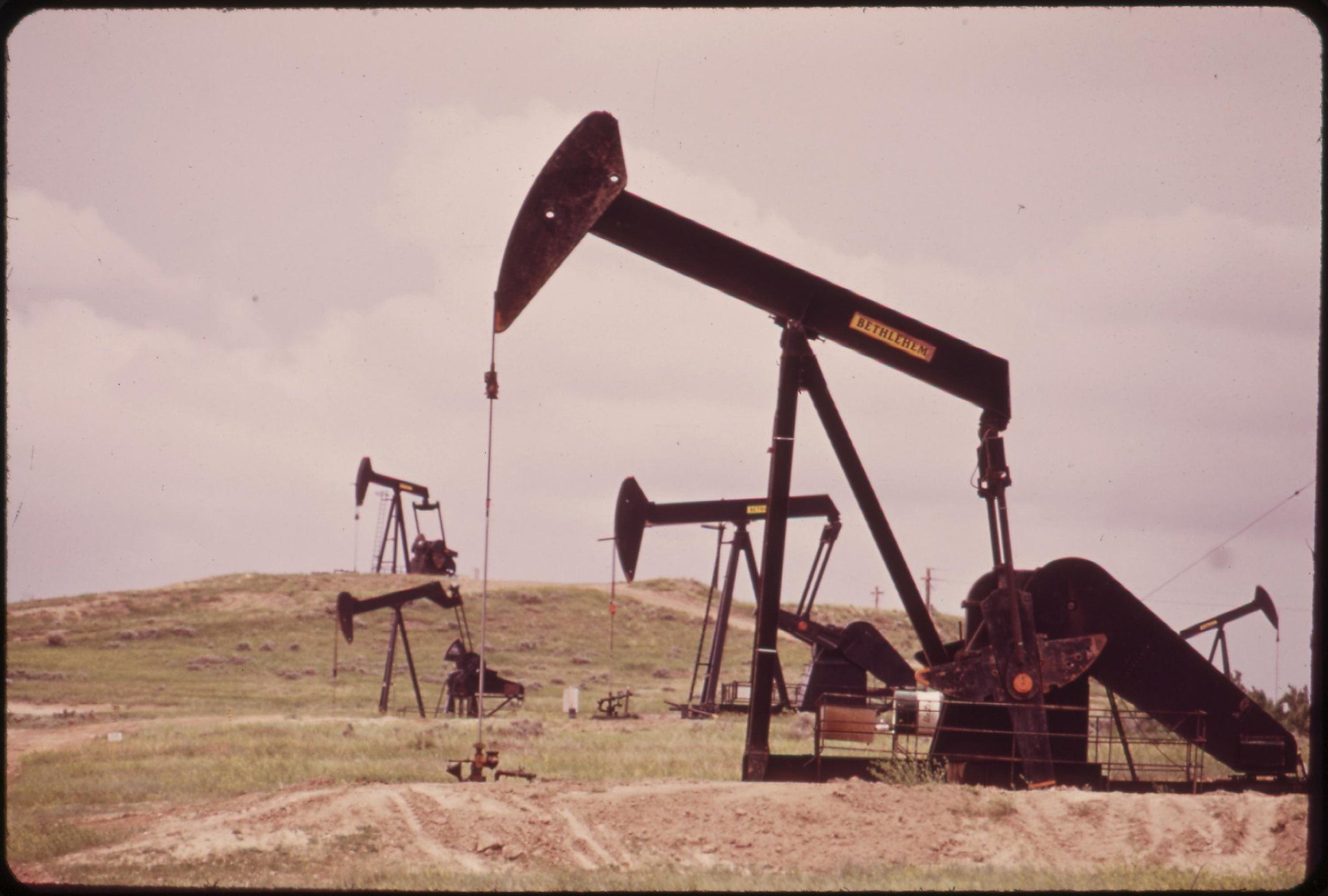
Oil wells near Teapot Dome, Wyoming, 06/1973 (Public Domain)
Because of this, we might see ‘carbon’ (in many ways and through diverse processes) as binding a nexus of climate, life, the economy, politics, and the current conjunctural crises we face – linking entities, actors and institutions across time and at multiple scales, from molecular and cellular to global and ‘planetary’.
All of this stickiness, relationality, heterogeneity and politics hides behind a deceptively simple word. As linguists might say, ‘carbon’ is a signifier that points to a dynamic field of relations and processes.
It is both a necessity and limitation of human language that naming something creates a symbol, an abstraction. On one hand, this helps us to make sense; to make the unseen more legible; allow us to conceptually break down, think and communicate about complicated phenomena.
But, on the other hand, naming can create conceptual slippage, giving rise to fallacies of reification. This happens when something abstract – a name, category, or way of describing the world – becomes treated as if it were a natural, fixed, independent or detachable thing in its own right.
From C to tCO2e
As climate change has risen on international agenda in recent decades, the term ‘carbon’ has taken on a new life and new meanings. It has become a shorthand in climate policy spaces, popular culture and in scientific research, for a peculiar, slippery and ultimately, I argue, mythological creation: a metric called tonnes of carbon dioxide equivalent, or tCO2e.
The contemporary climate policy landscape has evolved around the idea and metric of tCO2e. The term arose in the context of international climate discussions in the 1990s. But in the years since then, the construct of tCO2e has become central to how the problem of climate change and possible ‘solutions’ to it are imagined, understood and governed. It is the basis of compliance regimes and voluntary carbon markets, and of calculations of ‘Net Zero’, ‘Nationally Determined Contributions’ (NDCs) to greenhouse gas (GHG) emissions, and ‘Climate Neutrality’ as advocated in the 2015 UNFCCC Paris agreement.
Yet, for many people, it’s still unclear what we actually mean when we talk about ‘carbon’ in this sense, and this creates slippage between the metric and the materiality of actuality of GHG emissions. tCO2e isn’t a pre-existing ‘thing’: unlike carbon atoms, the molecules they are part of, or the substances and bodies they pass through, tCO2e doesn’t have a tangible form in nature.
‘Tonne’ here doesn’t refer to weight, but to an estimate of impact. Rather, tCO2e is an abstract proxy metric that serves as a convenient legal and accounting tool designed to translate the global warming potential of six different greenhouse gases (sometimes called the ‘Kyoto basket’) over a 100-year span, by using the global warming potential of 1 tonne of carbon dioxide as a benchmark.
Translating different gases and diverse processes through which they are emitted and sequestered into a single proxy metric allows estimated emissions released in one place to be compared with reductions or removals achieved somewhere else in the world. ‘Carbon is carbon’ and a tonne is a tonne.
Legal scholar Julia Dehm has described the tCO2e abstraction as a form of detachment that ‘makes it possible to think about complex, situated metabolic interactions’ – the messy socio-political and biogeochemical relationships and processes through which carbon flows – as ‘stocks’, reckoned as ‘standardisable, exchangeable and commodifiable and ultimately tradable’ units of environmental impact.
From metrics to markets
The creation and formalisation of this abstract entity of tCO2e has enabled the creation of global carbon markets and what researcher Diana Liverman has called ‘a new and surreal commodity’: the carbon offset.
At their core, voluntary carbon markets are built upon on the idea that environmental harm and environmental health are substitutable if they can be properly accounted for. The widely understood rationale is that if climate change is a global challenge, and there’s only one atmosphere that the whole world shares, then units of ‘bad’ can be balanced out or ‘offset’ by creating an equivalent or greater amount of ‘good’ somewhere else. Emit here, protect and restore a forest or grassland there, and it will all even out on the balance sheet, in the atmosphere, in the aggregate.
This logic underpins the widespread adoption of carbon offsetting by individual consumers, firms and policy communities as a climate mitigation solution. In recent years, policy efforts have aimed to promote and expand voluntary carbon markets globally as a pathway for achieving ‘green’ economic growth. A growing number and variety of land-based mitigation projects are generating and selling quantified climate impacts, linked to existing forests, wetlands, peatlands and, increasingly, grasslands – which include agricultural landscapes used for pasture.
Usually issued as certificates following a complex verification and pricing process, carbon offsets are not conventional market objects like cotton, steel or apples. They are ‘intangible’ commodities. They lack physical substance, but represent a claim to ownership, use or access rights over a non-monetary asset that cannot be physically traded. (Other common examples of this are things like digital media, software, copyrights, licenses and patents, or financial instruments like derivatives.)
Understanding the form carbon offsets take is important to understanding how voluntary carbon markets function, and for whom. What is being bought and sold is not ‘carbon’ itself, or even units of tCO2e. It is a claim to an abstract amount of climate impact, which can then be applied by a consumer, enabling them to have claimed to neutralise their own emissions.
For the system to work, the myth must hold through layers of abstraction: that ‘carbon is carbon’ and a tonne is a tonne – regardless of where it comes from, how it is produced, avoided or sequestered, whose labours made the offset, or where and by whom it is applied.
The myth that ‘carbon is carbon’ is a specific expression of a broader dynamic that is part of all commodity markets. This is the creation of equivalence, or fungibility, among things that are materially and socially very different.
As consumers, we all agree to be part of this fiction every time we shop for groceries and pay for things with money. Yet, at the same time, carbon offsets and similar ecosystem service and nature-based assets are also unique sorts of market objects. They are a bit uncanny in the forms they take, how they look different from different perspectives, how they circulate, what they do in the world, the well-documented politics and challenges that they can generate – ecological, social, technical, market-related, and ethical.
I argue that many of these challenges emerge from tensions between, on one side, the grounded awareness of carbon’s situatedness and, on the other, reification of the myth that ‘carbon is carbon’.
In other words, there is a stark disjuncture and contradiction between seeing carbon’s entanglement in lived socio-ecological, geological and productive webs of relations and processes that underpin all earthly life and value but also crises, and the often geographically and socially distant policy spaces where voluntary carbon markets can be instrumentalised and promoted in ways that can make these relations invisible. This simplifies and obscures the complexities that the market seeks to govern in the first place.
The promise of climate finance flowing to local landscapes, livelihoods, and research is compelling. It represents a vital resource for regions long overlooked or outright neglected by national funding strategies and shrinking development budgets.
But as voluntary carbon markets evolve and expand, we must be aware of how this process can affect not only how rangelands and pastoralism are ‘seen’ and valued within climate governance discourse and policy spaces, but how responsibilities and challenges associated with climate change itself are distributed across geographies, across time, and across social difference.
This means that the shape that climate finance takes is fundamentally tied to questions of environmental justice and equitable and liveable climate futures. Are voluntary carbon markets being used in ways that allow us to clearly see beyond the fiction, as means to support landscapes, livelihoods and research; or are they treated as an end in themselves?
Recognizing the myth of ‘carbon is carbon’ and the politics, tensions and challenges that it configures does not mean abandoning climate action. Rather, it challenges us to approach climate finance with clearer eyes, aware of the realities and contradictions of the situation we find ourselves in, better prepared to meet and assess challenges.
Regardless of the shape climate finance takes, we must recognise abstraction for what it is: that it is not neutral and does not just represent reality, it reshapes it – what we see, what we value, and what we miss. It is a call to be honest with ourselves about what we are doing, what we are not, and what we should.
 Want to discuss myths about carbon? Join our fourth rangeland myths online conversation of 2026, on the myth of ‘carbon is carbon’, on Thursday, 23 April from 11:00 am – 12:30 pm (UK time).
Our speakers are Saverio Krätli, Ruan de Wet and Meenal Tatpati, and the discussion will be co-chaired by Amber Huff and Charis Enns.
We warmly invite anyone with an interest in rangelands, pastoralism and myths about them, to join, share your stories and rethink how we ‘see’ rangelands and pastoralism.
Read more
The REPAiR Project blog brings diverse views from our project team and collaborators into conversation around key themes and ideas.
Related content
2 March 2026 Linda Pappagallo
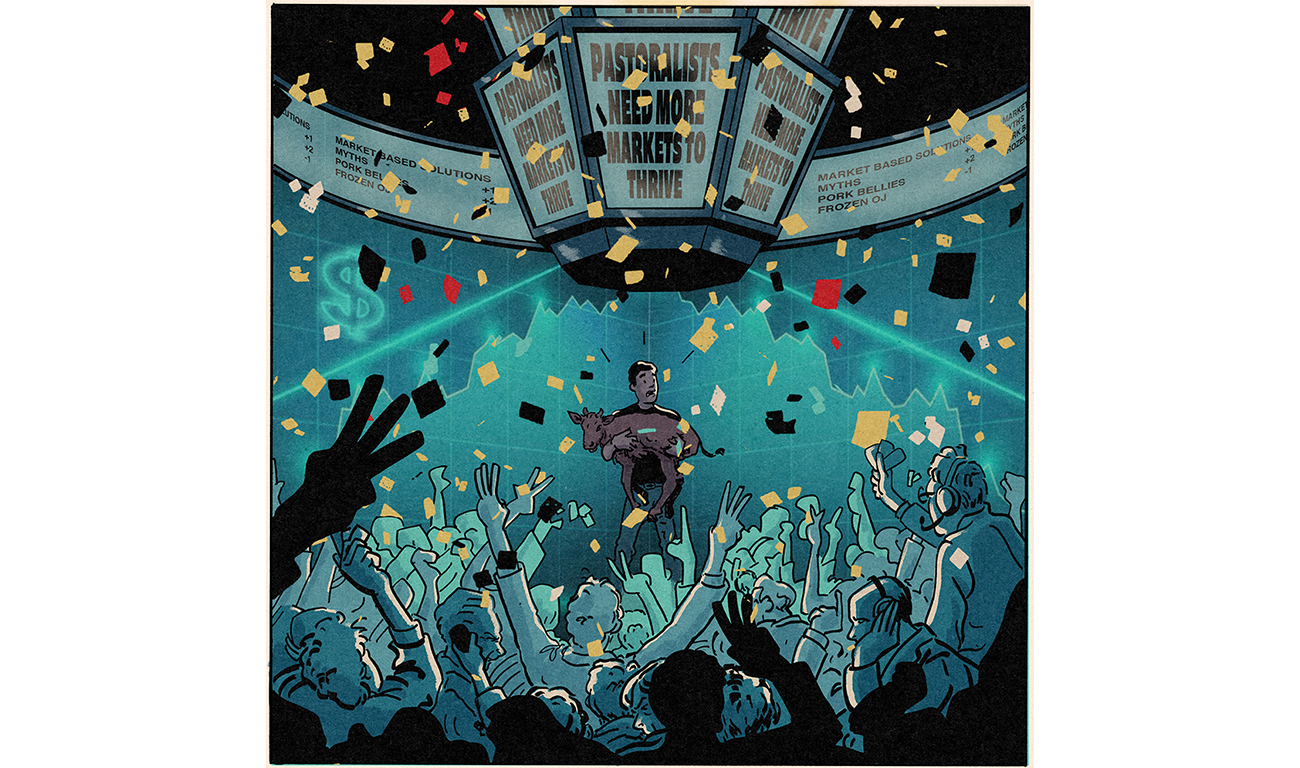
Myth: Pastoralists need more markets to thrive
The myth that pastoralists simply need ‘more markets’ to thrive rests on a set of deeply rooted assumptions about markets and animal husbandry.
2 February 2026 Linda Pappagallo
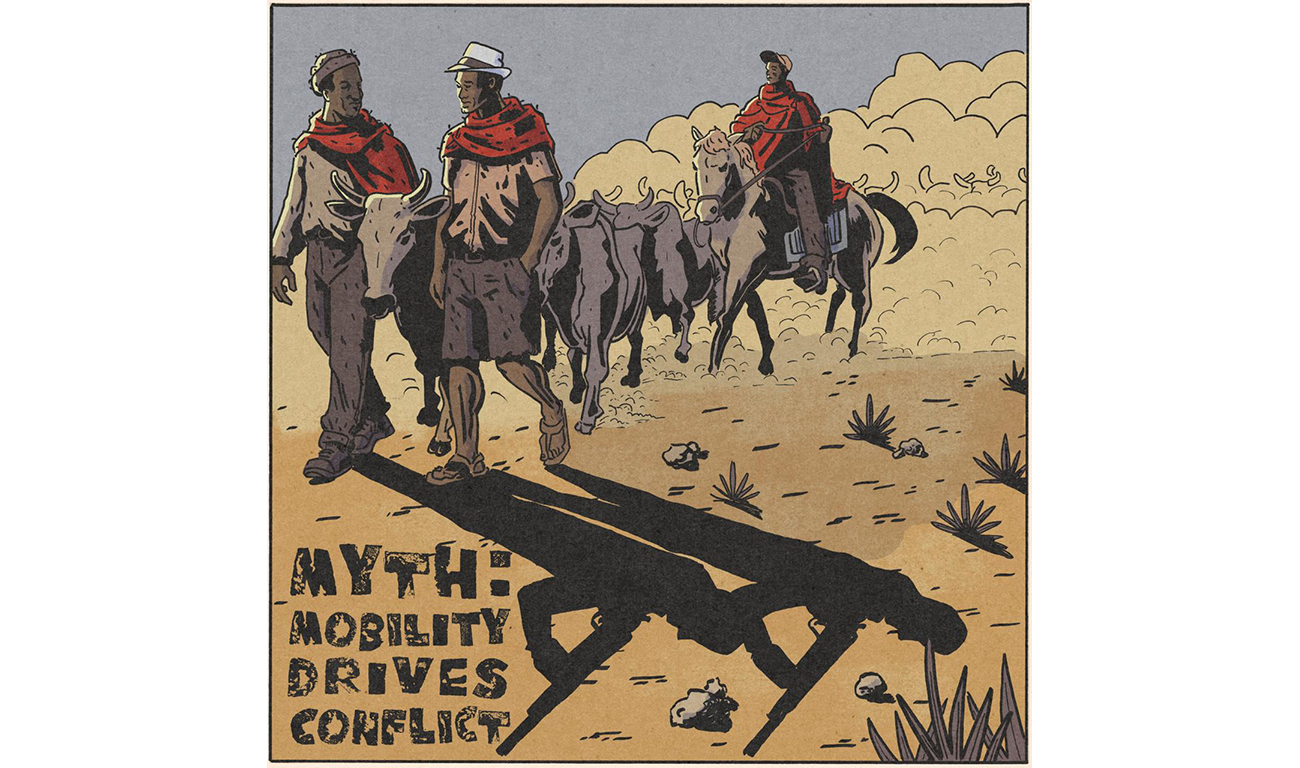
Myth: Mobility drives conflict
Bias against mobile livelihoods has a long history, through colonial regimes into modern development thinking. But mobility can be a vital tool for connection and resilience.
9 January 2026 Amber Huff
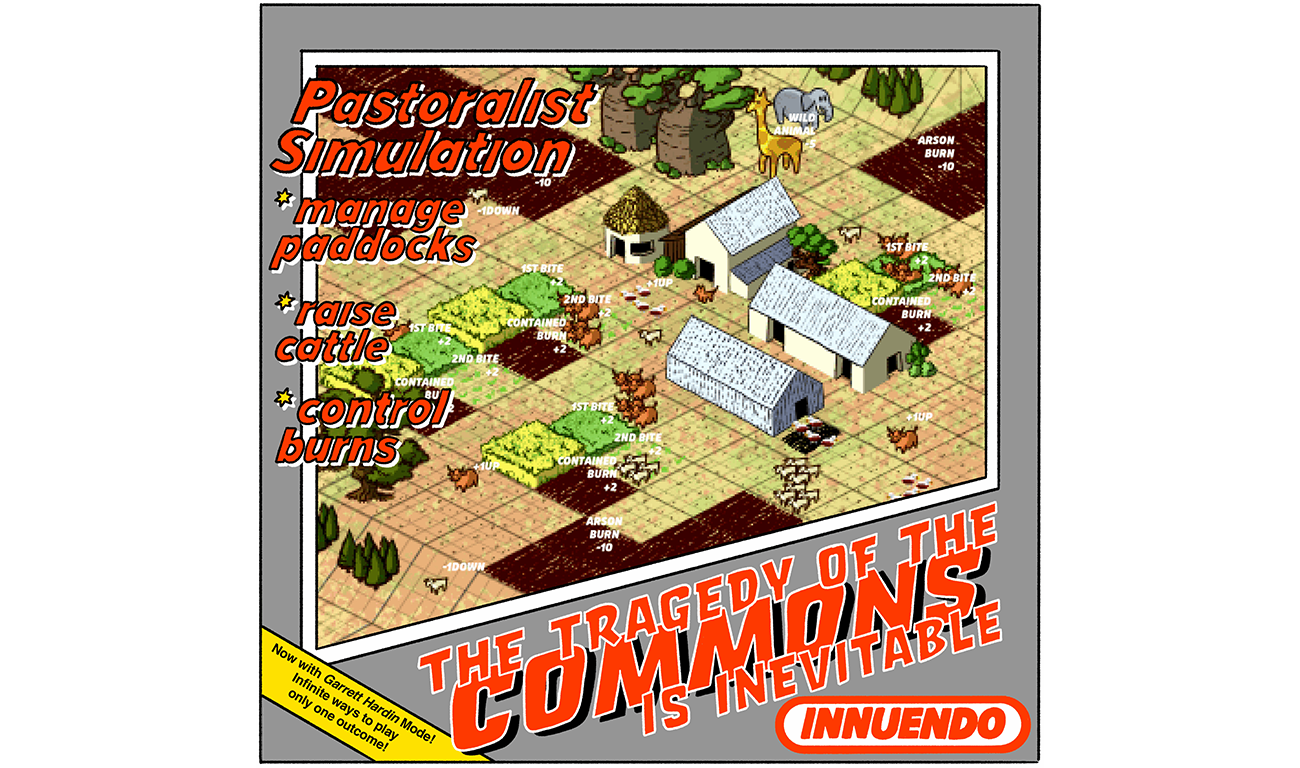
Myth: The tragedy of the commons is inevitable
As the International Year of Rangelands and Pastoralists calls attention to the global diversity, importance, and governance of the world’s rangelands, the myth of the tragedy of the commons is particularly relevant and illustrative of the power and dangers of universalising and reductive myths.
5 December 2025 Amber Huff & Linda Pappagallo
Exploring rangeland myths in 2026
Through 2026, the REPAiR is hosting a series of activities that explore ‘rangeland myths’ in global perspective. We offer an open invitation to get involved, share your experiences and stories, and help us to rethink what we think we know about rangelands and pastoralism.