

2 June 2026 Simphiwe Tsawu & Tafadzwa Dzingwe
Whose rangelands are they? Historical messiness in South Africa
The crucial question of who ‘owns’ rangelands in South Africa is shaped by overlapping forces – traditional authorities, colonial legacies and more recently-formed grazing associations.
South Africa’s rangelands are more than just open grazing land. They are a complex reflection of history, power, and money. Above all, historical legacies have a long-standing influence, affecting the overlapping authority arrangements and contestation over governance we see today. But what does this mean for people on the ground?
As new opportunities like carbon credits and livestock auctions bring fresh revenue into these spaces, the competition over who truly holds authority and who manages the land becomes even more intense.
One way to understand this is by sharing the stories of members of grazing associations – groups that have been created to help with decisions and management in particular areas. In doing this, we are diving deep into the messy, real-world negotiations that define how these rangelands are run in a modern market.
In this blog post, we highlight historical legacies of South Africa that are at the root of modern-day structures of overlapping authority and contested governance. One cannot separate the two, since today’s messy governance landscape arises from the intersection of traditional authorities, grazing associations, and state representations that are a direct result of colonial and apartheid-led land dispossession and betterment schemes.
For rangeland management, this implies that such spaces are not just ecological areas, but negotiated landscapes. The interplay of these factors suggests that governance is not just about following a grazing plan, but a constant negotiation between mediators, including traditional authorities, democratic representatives, grazing associations and NGOs.
The hidden significance of the commons
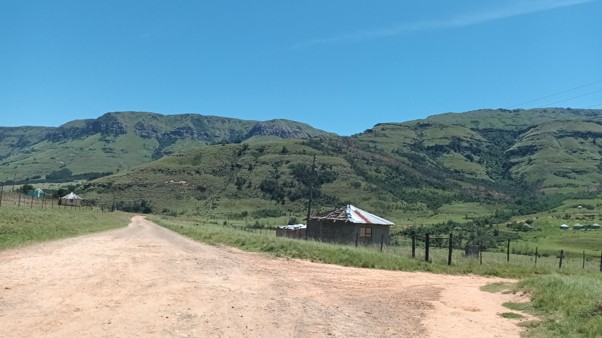
Communal rangelands are a vital source of livelihoods. They support extensive grazing for livestock and provide a wide range of natural resources, including wood fuel, water, medicinal plants, thatching grass, weaving materials and wild fruits. They also play a critical role in biodiversity conservation and carbon storage.
In many parts of South Africa, such rangelands are cornerstones of rural economies, providing food security for both livestock and people. These rangelands belong to community members and are used by all villagers. Historically, residents of villages relied heavily on these commons for their needs, and rangelands remain the primary source of forage for livestock in these areas.
Who has responsibility over communal rangelands in South Africa?
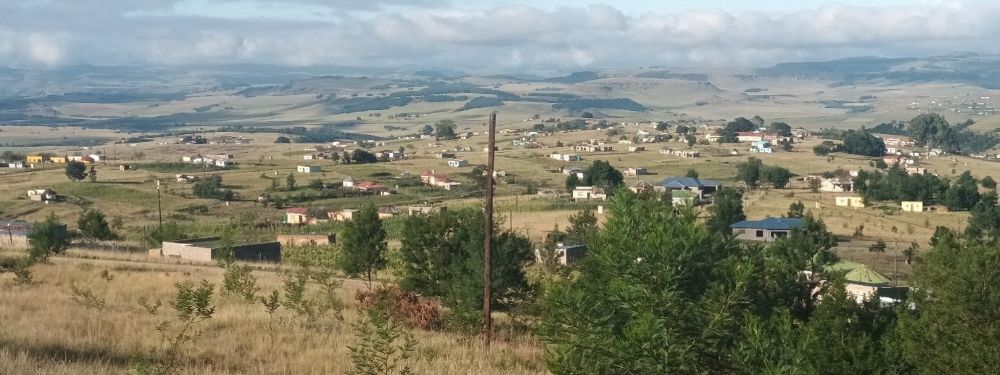
In South Africa, communal rangelands are in the former homeland rural areas: they occupy about 13% of the country’s land surface, and support the livelihoods of roughly one-third of the population.
For villagers in these areas, natural resources and livestock are not just assets; they are the base of survival. However, land ownership and governance in communal areas are still intensely contested. One perspective views traditional authorities as the rightful owners; the other maintains that villagers are the owners, with traditional authorities acting only as custodians.
As scholar Essy Letsoalo (1987) explains, communal tenure has been historically misunderstood and distorted by legislation implemented by both colonial and apartheid governments. While some mislabel it as chiefly tenure akin to feudalism, the reality is more nuanced. A traditional authority governs both the people and the land, but it rarely acts unilaterally. Decisions are made through consultation with a traditional council, and once land is allocated to a household, the individual’s connection to that land is often considered stronger than the leader’s oversight.

The strength of pre-colonial systems
Before the colonial era, resource management under customary authorities was often more equitable and deeply embedded in the social fabric. This traditional land management by chiefs, headmen and elders effectively regulated livestock movement and water consumption to maintain grazing land.
Such practices provided essential resilience, allowing pastoralists to pool resources and mitigate the risks of South Africa’s unpredictable climate.
These arrangements were torn apart by colonial and apartheid regimes. By introducing private property and individual tenure, colonial powers denied pre-existing rights and weakened the authority of traditional authorities. This shift did not just change who held the rights; it fundamentally altered how the land was used, often viewing nature as a property to be commodified rather than a vital, living system. Governance strategies in many parts of the former homeland areas largely drifted away from the seasonal herding practices that ensured resilience.
Historically, groups such as the ama-Xhosa of the Eastern Cape had moved livestock with the seasons, grazing fertile valleys in the dry season and moving to open plains only when spring rains brought new growth. Today, the loss of these transhumant patterns, combined with weakened local authority and insecurity of land tenure, has left many rangelands vulnerable to deterioration.
Confusion/messiness persists
The ownership of communal rangelands remains one of the most contested legacies in post-apartheid South Africa. Such rangelands exist in a state of ambiguity: technically held by the state, yet historically controlled by traditional authorities, with community members having use and rights as groups or clans within the villages.
This messiness is not accidental; it is the result of decades of competing policies that have failed to define exactly where one authority ends and another begins.
Since 1994, the South African government has struggled to reconcile democratic rights with traditional systems. The state initially sought to replace apartheid-era permits to occupy with legally enforceable rights for the people. However, traditional authorities pushed back, insisting that under customary law, they are the primary custodians of the land.
Legislation such as the Communal Property Association (CPA) Act of 1996 was designed to allow communities to manage resources democratically. Yet these policies often clashed with the Traditional Leadership and Governance Framework Act (TLGFA) of 2003, which rebranded apartheid-era tribal structures as formal Traditional Councils. In 2004, the Communal Land Rights Act (CLARA) attempted to restore these by transferring titles to local committees. However, the Constitutional Court struck it down in 2010, ruling that it risked entrenching old power structures rather than empowering the rural poor.
Given this ongoing legal confusion, the question of which institutions should own and govern communal rangeland remains a deeply contested issue in rural areas in South Africa.
The messy reality on the ground: The Umzimvubu Upper Catchment experience
In the villages of Umzimvubu Upper Catchment, this policy vacuum has led to a negotiated governance model. As researchers for the REPAIR project, we observed that while traditional authorities maintain ultimate power over land access, their day-to-day management of grazing is often viewed as ineffective.
This gap is being filled by grazing associations such as Bambanani Grazing Association, Frank Grazing Association, Hlankomo Grazing Association and Makhunga Grazing Association, with the support of Meat Naturally Africa (MNA) and the Rural Development Foundation (LIMA). These associations represent a move toward a market-integrated model, using eco-rangers and technical grazing plans to improve land health and market access.
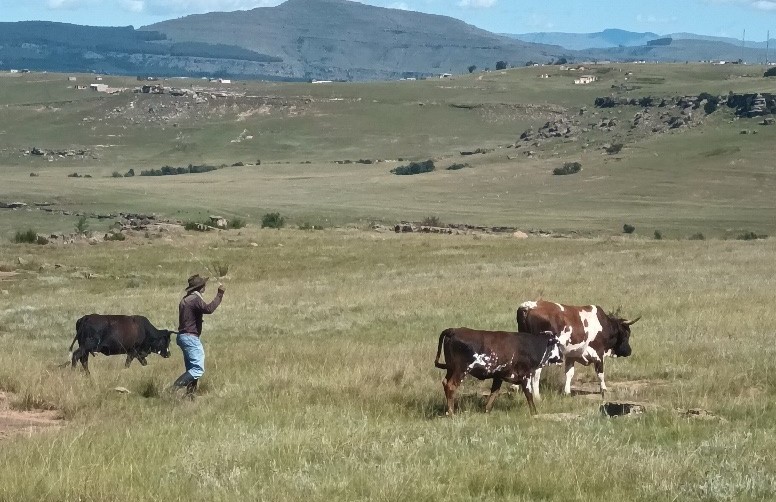
However, their existence is a delicate balancing act. For intermediaries such as LIMA and Meat Naturally to operate in these villages, they negotiate with traditional authorities. Success often depends on whether a traditional authority views the grazing association as a tool for development or a threat to their traditional role as the ‘custodian’ of the land.
Because the state has failed to enact a land tenure act that clearly defines the hierarchy between a voluntary grazing association, and a legally recognized traditional council, confusion remains the status quo.
While the introduction of grazing associations in these villages aims to improve management, their overlap with established governance systems of traditional authorities fuels confusion over the control and perceived ownership of communal rangelands.
This raises a critical question: in a landscape of overlapping authorities, who truly owns the rangeland within these villages and across South Africa’s rural areas?
Related posts
16 April 2026 Wakhe Mkhize
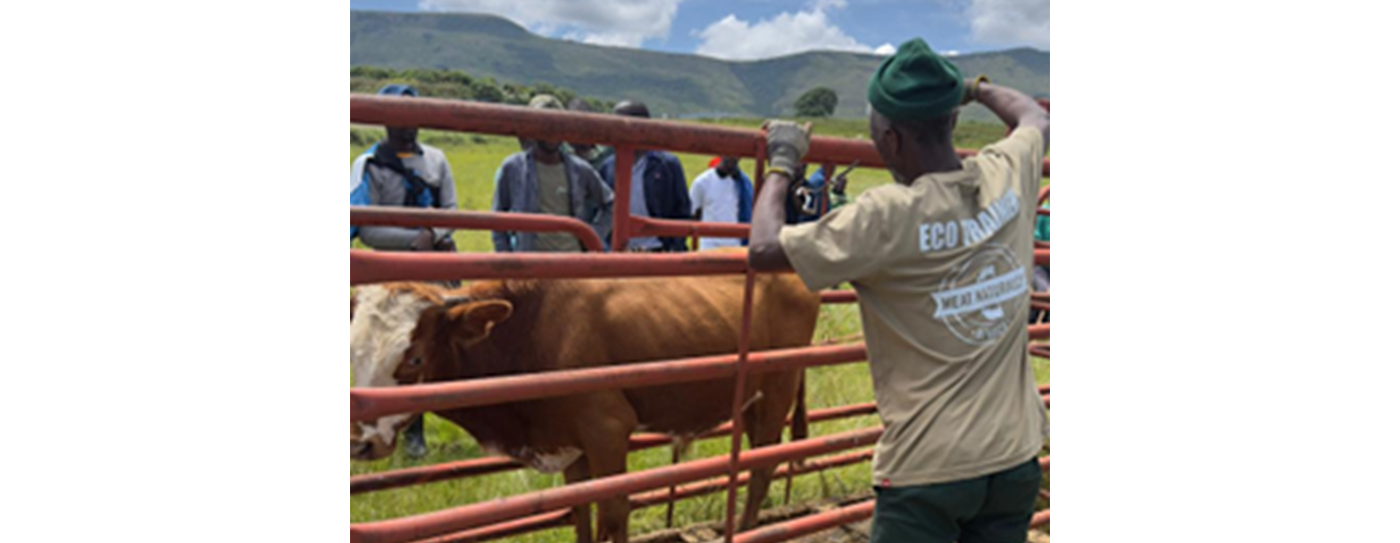
Cattle, culture, and changing markets
Wakhe Mkhize reflects on changes and challenges in markets faced by farmers in KwaZulu-Natal, and what they mean for health, land and livelihoods.
12 November 2024 Farai Mtero
Creating equitable pathways in South African rangelands: why history and politics matter
To understand the challenges of landscape stewardship in South Africa, we need to appreciate how rangelands have been shaped by history, and how this continues to affect the way rangelands are governed today.