
16 April 2026 - Wakhe Mkhize
Cattle, culture, and changing markets
Reflections from Communal Rangelands in KwaZulu-Natal
Wakhe Mkhize reflects on changes and challenges in markets faced by farmers in KwaZulu-Natal, and what they mean for health, land and livelihoods.
In many rural communities across KwaZulu-Natal, cattle are far more than just livestock. They represent wealth, identity, and cultural value. Growing up in a farming environment, I learned early on that cattle carry a deep social meaning. In my tradition, a man is not considered handsome because of his physical appearance, but because of the number of cattle he owns. Cattle symbolize responsibility, stability, and respect within the community. They support families during difficult times, are used in cultural ceremonies, and serve as a form of long-term investment.
Because of this, livestock farming plays an important role in rural livelihoods, especially in communal areas where many households rely on cattle for both economic and cultural purposes. However, these systems are increasingly facing several pressures. Communal rangelands are under strain from overgrazing, land degradation, and limited access to formal livestock markets. These challenges affect not only the health of grazing land but also the opportunities for farmers to benefit economically from their animals.
As a farmer and a researcher, I have witnessed these challenges firsthand. My Master’s research in Geography and Environmental Management explores livestock value chains in communal areas of KwaZulu-Natal, focusing on two municipalities: Impendle and Ulundi. The study looks at how livestock move through different markets, who the key actors are in these systems, and how programmes like Herding for Health are helping farmers improve both rangeland management and market access.
Changing patterns of selling
One of the most noticeable changes in recent years has been the shift in how livestock is sold. In response to outbreaks of Foot and Mouth Disease (FMD), I have recently seen direct livestock sales instead of traditional auctions.
While these direct sales help farmers maintain some level of market access during difficult times, they also come with challenges. Many farmers feel that the prices offered through direct sales do not fully reflect the true value of their livestock. In auction environments, multiple buyers compete, often pushing prices higher. Without that competition, farmers sometimes feel they have less negotiating power.
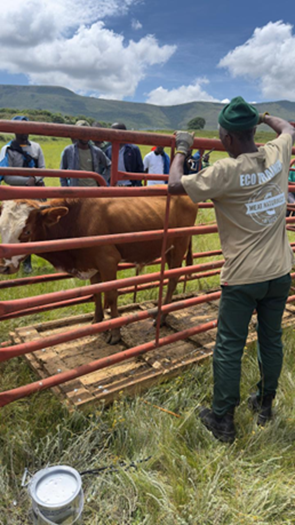
Figure 1 (right): Cattle being weighed during the first direct livestock sale held in Impendle. Direct sales were introduced to help farmers maintain market access during Foot and Mouth Disease (FMD) restrictions, although farmers sometimes feel that auction markets provide stronger price competition.
These differences become very clear when comparing communities such as Impendle and Ulundi. While both areas rely heavily on communal grazing systems, the way livestock systems function locally is influenced by changes in land condition, grazing pressure, and market access. In Impendle, farmers benefit from being close to major livestock auctioneers such as AAM. This allows them to participate more easily in formal auctions, where animals can be sold through competitive bidding, in contrast to farmers in Ulundi. Access to these auctions can significantly improve the prices farmers receive for their livestock.
The situation in Ulundi has been more challenging in recent years. Due to the high prevalence of Foot and Mouth Disease in the area, livestock movement has been heavily restricted. These disease control measures have made it difficult for farmers to transport animals and access formal markets. As a result, the livestock value chain in Ulundi has changed significantly, with many farmers relying on alternative sales arrangements and facing limited market opportunities. I am looking forward to the mobile abattoirs that they sometimes suggest as a solution.
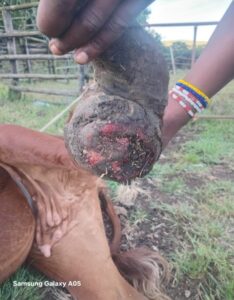
Figure 2 (left): A hoof injury observed in cattle in Ulundi during the Foot and Mouth Disease outbreak. Such lesions cause severe pain and lameness, making it difficult for animals to move and affecting livestock productivity.
Understanding these local differences is important when planning interventions that aim to support communal livestock farmers. Programmes such as Herding for Health are trying to address these challenges by combining rangeland restoration, improved grazing management, and better market access. By supporting farmers with practical knowledge and creating new opportunities for livestock sales, these projects aim to strengthen both rural livelihoods and the health of communal rangelands.
Communal livestock systems are not just about animals or markets: they are about people, culture, and landscapes that have supported rural communities for generations. Supporting these systems requires approaches that recognize both the ecological importance of healthy rangelands and the social and economic value that livestock hold within communities.
Read more
The REPAiR Project blog brings diverse views from our project team and collaborators into conversation around key themes and ideas.
Related content from REPAiR

2 March 2026 - Linda Pappagallo
Myth: Pastoralists need more markets to thrive
The myth that pastoralists simply need ‘more markets’ to thrive rests on a set of deeply rooted assumptions about markets and animal husbandry.
18 February 2026 - Timothy Gibbs
Getting beyond the formal/informal divide
A stark line is sometimes drawn between ‘industrial/commercial’ and ‘informal’ segments of South Africa’s meat industry. But are such distinctions helpful?