

2 February 2026 Linda Pappagallo
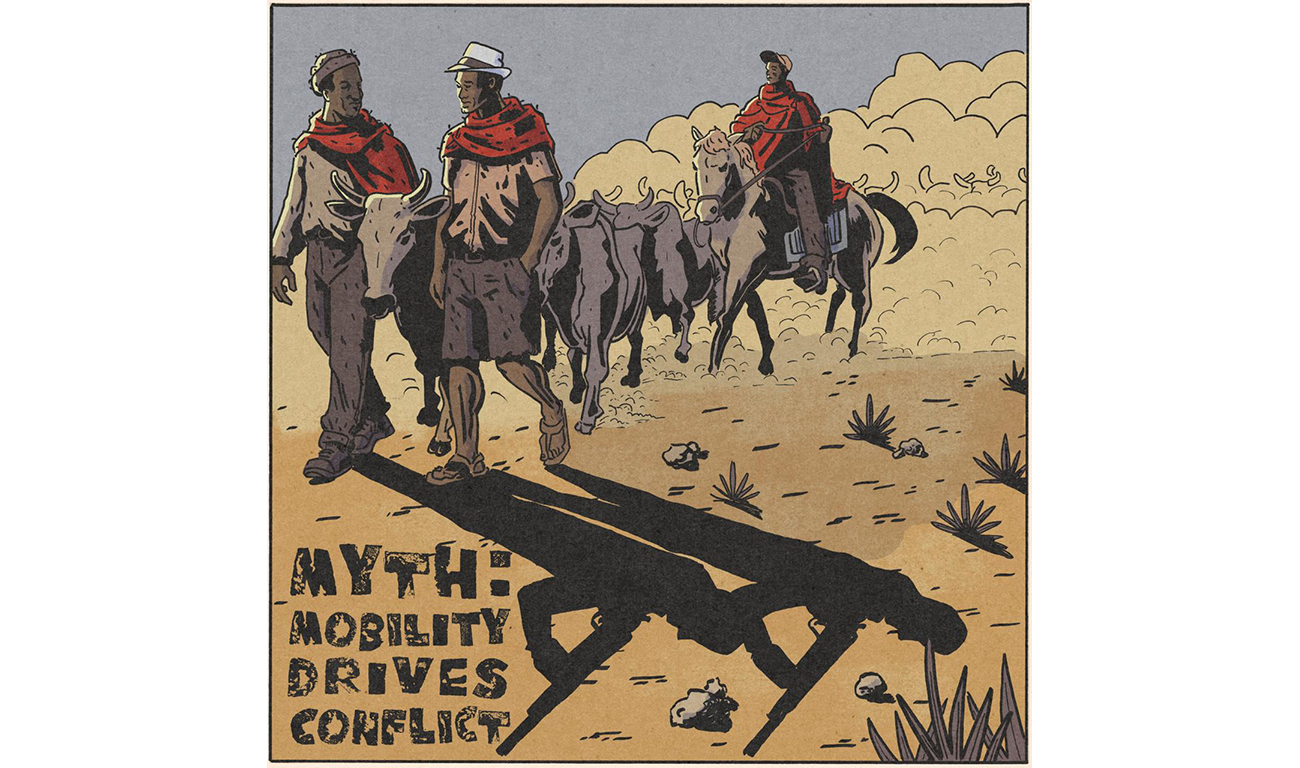
Myth: Mobility drives conflict
A simplistic picture of 'farmer-herder conflict' draws on historic biases against mobile livelihoods.

In recent years, the story of the so-called ‘farmer-herder’ conflict has become a dominant framing of patterns of violence in Sub-Saharan Africa. While authors often acknowledge complexity, the basic story repeated in popular media, policy and scientific literature posits generic causal linkages between climate change, pastoralist mobility, resource scarcity, and violence.
Some stories portray mobility as a response to scarcity: climate change induces scarcity, forces people to move and results in conflict. Other stories describe how mobility induces scarcity, which then results in conflict: people and livestock move for various reasons, scarcity of ‘resources’ is induced (typically explained through the “tragedy of the commons” story), and this also results in conflict.
Although these two different versions of the story are tangled together in practice, they are often collapsed into a single representation of conflict: ‘farmer-herder conflict’.
As many have already argued, this simplistic representation can be misleading and depoliticising. It risks glossing over different types of actors, diverse historical trajectories, and different types of insecurities.
The ‘farmer-herder conflict’ story is an example of the type of stories that feed myths like ‘mobility drives conflict and insecurity’. These stories risk blinding us to the underlying political and historical structural dynamics that shape resource access and conflicts. These include, for example, the impact of violent settler politics, war, or how large-scale infrastructure development, monoculture plantations, land grabs and land fragmentation reduce access to wet- and dry-season grazing — further reducing people’s mobility with severe environmental and human justice impacts.

The view that conflict plays out between ‘autochthonous’ farmers and ‘foreign’ herders has risen in prominence as climate change, migration and environmental security have become major geopolitical issues. Global climate conflict rhetorics essentialize mobility as both a symptom and a driver of crisis, scarcity and political instability.
Meanwhile, research in environmental history, development studies and political ecology warn against rhetorics that infer surface correlations between climate-induced (real and imagined) threats, “resource scarcity”, and various forms of conflict.
For example, regional analysis of ‘farmer-herder’ conflict finds that multiple forms and dynamics of conflict are often conflated, making dangerously flawed assumptions about causality while obscuring context-specific drivers of conflict that may have no direct association with either environmental change or scarcity.
When pastoralism and crop farming are cast as antagonistic modes of production —practiced by rigidly distinct and homogenous groups, often divided along clear ethnic, territorial and even moral lines — we risk concealing historical interdependencies between different modes of food production. Despite being widely analysed, challenged and contested, simplistic arguments persist, particularly on rangelands and in drylands.
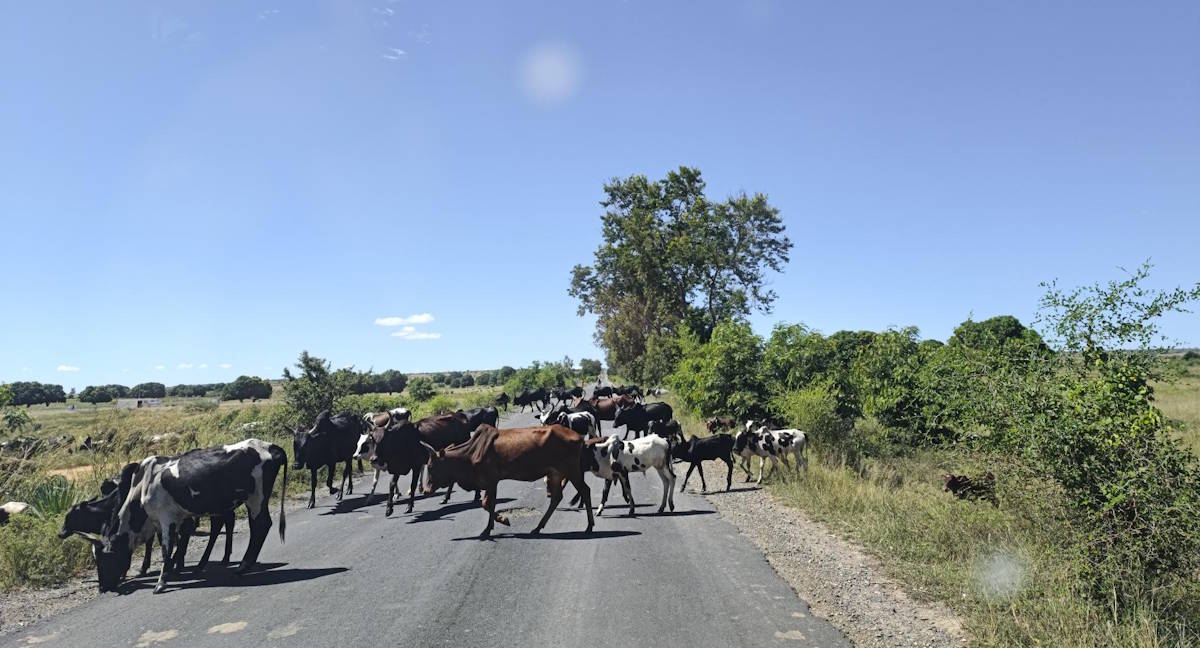
Zebu crossing the road in Madagascar. Photo: Livasoa Randriamanalina
Unpacking the myth
At the heart of the myth of ‘mobility drives conflict and insecurity on rangelands’ are narrow sentiments and methodological misconstructions that reflect sampling bias, entrenched stigmas and negative stereotypes against specific people, regions and countries.
Many of the biases are marked by a dualistic view of ‘mobile vs sedentary’ livelihoods. These biases have long been discussed as being a major driver of the social marginalisation of mobile pastoralists and people whose identities and livelihoods are characterised by different forms of mobility (eg travellers, shifting cultivators). Mobile people are represented as un-rooted, lacking moral bearings, where mobility is associated with criminality, poverty and all manner of social problems, a threat to authority, the enemy of order, an obstacle to modernisation and development, and a vector of ecological predation and violence.
Persistent associations between mobility, conflict and insecurity are rooted in a long history of ‘sedentary bias’, which has been described as a type of ‘metaphysics’ that imagines communities, spaces and places as fixed points or static bounded areas. Sedentism, a set of tacit assumptions on fixity, regularity, formality and boundedness, structures how people perceive space and understand practical and technical problems in rangeland restoration, conservation and land governance. The sedentist bias underlies modernist conceptions of place and belonging; it is present implicitly in the bureaucratic foundations and interpretations of law, where people need to be bureaucratically legible. The sedentary bias feeds ‘development imaginaries’ – the aesthetic and technical ways in which development is designed and planned.
These biases privilege a series of views, from naturalised notions of scarcity, to stability-oriented policymaking (seen as the norm), vagrancy laws, and border-control stances that go as far as claiming that the Great Green Wall is ‘solving an ancient conflict’ between farmers and herders.
Policy implications
It is clear that the movements of people and livestock allow for people to adapt to various conditions, ranging from induced displacement and exile, to variable environmental conditions. Humans, plants and animals foster (climate) resilience through interdependency, exchange, and specialisation – features that are produced by mobility. Ample evidence shows how synergies between mobile pastoralism and settled crop farming are made possible by livestock mobility, and continue despite the media’s focus on conflict.
Policy discourses that align with the ‘mobility drives conflict’ model are problematic because they often fall into the trap of proposing solutions that ultimately erode climate resilience. If mobility equals conflict, the simple argument goes, we need to reduce the mobility of livestock and people, to reduce conflict.
For example, in 2017 Ghana introduced a national cattle ranching project, based on the idea that creating ranches would restrict movement, thereby reducing the risk of violent confrontations between farmers and herders. Similar proposals have included shifting to grazing ranches as “modern livestock hubs”, or digitising grazing routes “to know where they are, who is using them”. Such detrimental “mobility regimes”, systems that enable or constrain movement, have long legacies.
Colonial administrations laid the foundations for restrictive mobility regimes, with huge impacts on rangeland connectivity, ecology and pastoral livelihoods. Restrictive regimes have subsequently developed and include forced sedentarisation and settler politics, grazing reserves, livestock identification and traceability systems, herder ID cards, grazing permits, open grazing bans, the delimiting of grazing zones, and security-based control. More inconspicuous forms include veterinary fences, regulated movements by mapping grazing boundaries and issuing permit systems for grazing (such as transhumance certificates), and environmental and conservation regulation.
Challenging the myth
Despite some novel elements, the essential components of the ‘mobility drives conflict’ narrative aren’t new at all. Rather, this myth repackages and updates a combination of historically powerful tropes, sometimes implicit and sometimes explicit, that have long been used as a dominant lens for ‘seeing’ rangelands – and particularly drylands – as poorly managed, resource-scarce, unproductive wastelands, prone to desertification, degradation, famines and violent conflict.
Challenging the mobility drives conflict myth requires challenging other tropes that compose it. This includes challenging the dogmatic ideas about relationships between population growth, resource depletion and environmental degradation, central to the mythology of the ‘tragedy of the commons’.
In practice, revisiting the way our economies, bureaucracies, health care and education systems are structured to be more resilient, modern and mobile requires rethinking how they can be inclusive of the daily life of mobile livelihoods. This requires challenging the sedentary bias, dealing with the entrenched biases against mobile peoples, subtly reproduced through the idea that mobile pastoralists are vulnerable to climate variability, are poor, inefficient and therefore in need of ‘development’. It requires understanding what ‘land security’ for mobile-based livelihoods means, understanding the rich realities behind why people move, and dropping heroic crisis narratives, especially in drylands.
From adapting to climate shifts to maintaining social ties across landscapes, the real threat to rangeland health and social wellbeing is not pastoralism, mobility or livestock – but the policies that fragment socio-ecological connectivity.
The author thanks Mathilde Gingembre for help in developing this article.
 Want to discuss myths about mobility and conflict? Join our second rangeland myths online conversation of 2026, on the myth of ‘mobility drives conflict and insecurity’, on Thursday, 26 February from 11:00 am – 12:30 pm GMT.
Our speaker is Dr. Teklehaymanot G. Weldemichel, and the co-chairs are Dr. Mathilde Gingembre and Tafadzwa Dzingwe.
We warmly invite anyone with an interest in rangelands, pastoralism and myths about them, to join, share your stories and rethink how we ‘see’ rangelands and pastoralism.
Further reading
- Syrian Society in Revolution and War (2011–2024) – Agrarian Migrations and Moral Economies in Times of War – Presses de l’Ifpo
- Status of mobility of livestock in Kenya and Ethiopia: Mapping of livestock routes and case studies on mobility blockages | SPARC-Knowledge
- Africa’s drylands need the right kind of support – listening to the pastoralists who live there
- Peace and security for pastoralist communities in African borderlands | Conciliation Resources
- Land use dynamics and farmer-herder conflicts: A spatial analysis of case studies from Sudan and Nigeria | SPARC-Knowledge
- Countering desertification and defusing climate wars: why myths matter | International Institute for Environment and Development
- Climate change and conflict – reframing the debate | International Institute for Environment and Development
- Uncertain Worlds #3 – Migration – Pastoralism, Uncertainty and Resilience – PASTRES
- Don’t Call It Farmer-Herder Conflict – The SAIS Review of International Affairs
Read more
The REPAiR Project blog brings diverse views from our project team and collaborators into conversation around key themes and ideas.
Related content
9 January 2026 Amber Huff
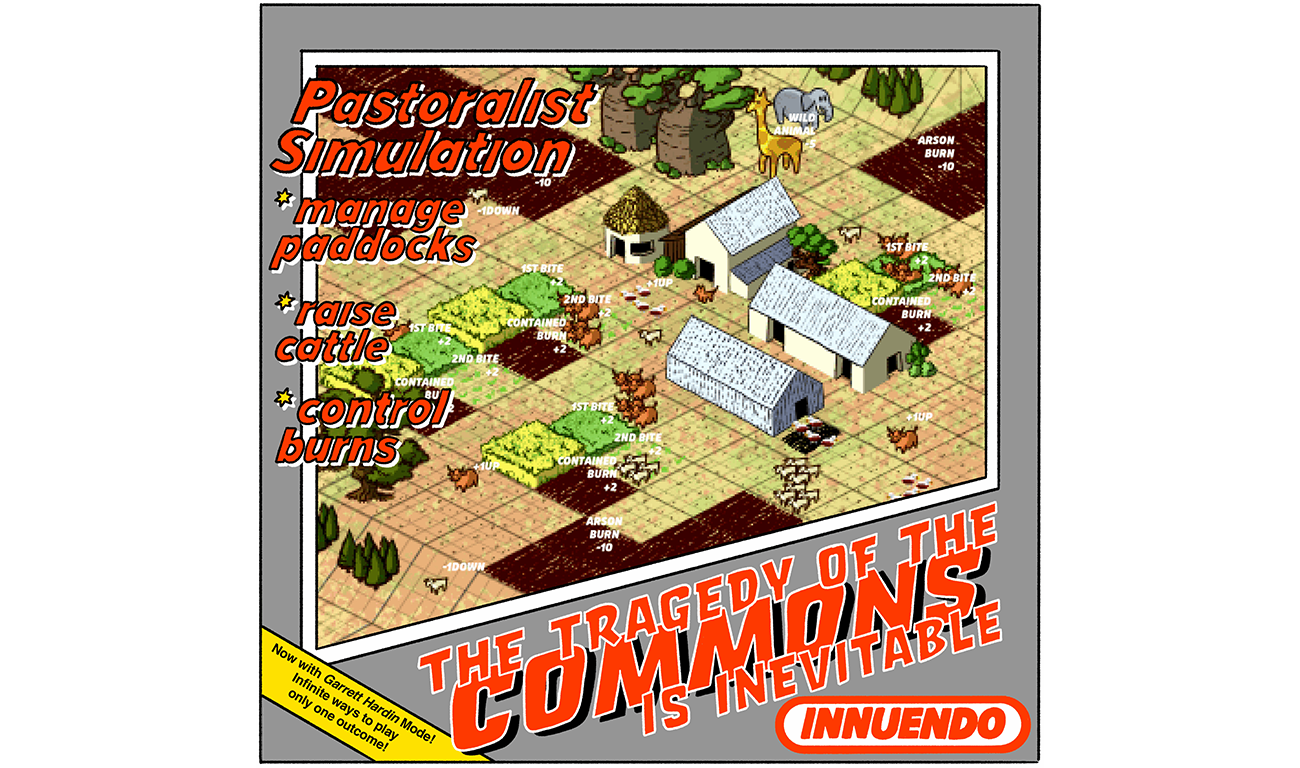
Myth: The tragedy of the commons is inevitable
As the International Year of Rangelands and Pastoralists calls attention to the global diversity, importance, and governance of the world’s rangelands, the myth of the tragedy of the commons is particularly relevant and illustrative of the power and dangers of universalising and reductive myths.
5 December 2025 Amber Huff & Linda Pappagallo
Exploring rangeland myths in 2026
Through 2026, the REPAiR is hosting a series of activities that explore ‘rangeland myths’ in global perspective. We offer an open invitation to get involved, share your experiences and stories, and help us to rethink what we think we know about rangelands and pastoralism.