
4 August 2026 Amber Huff , Kevin Kirkman & Maria Vorontsova
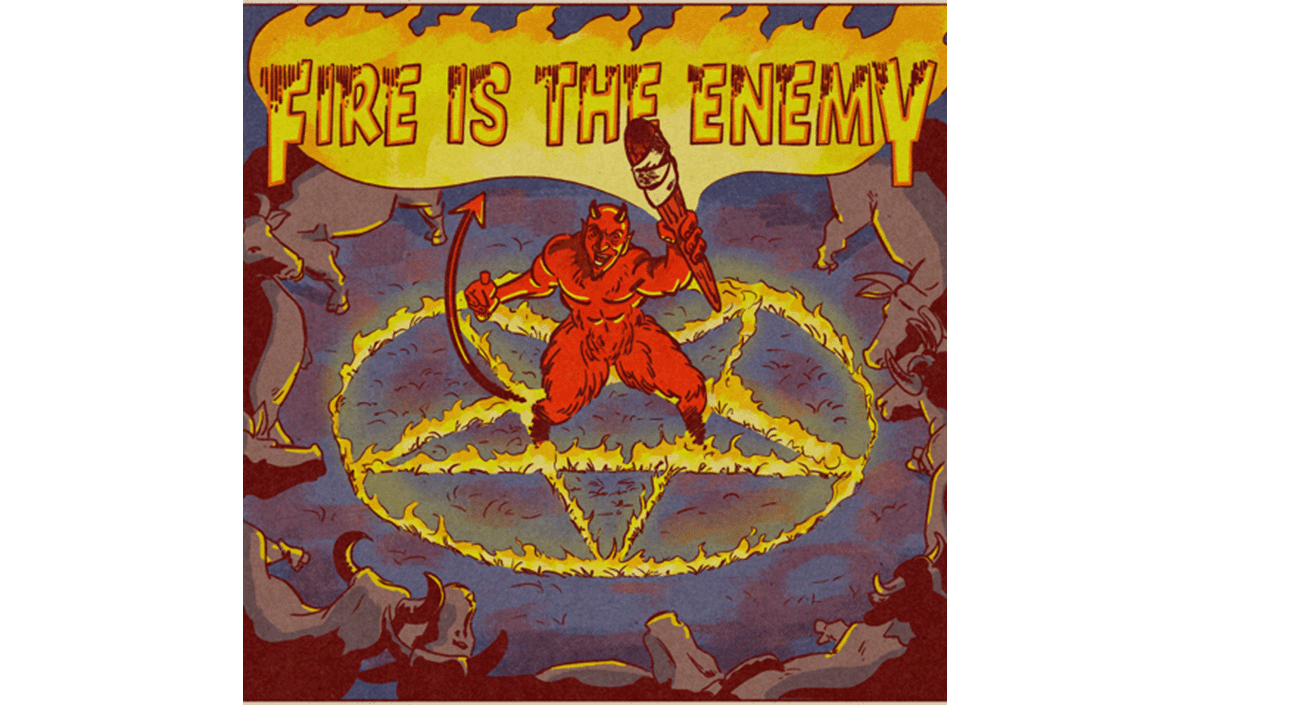
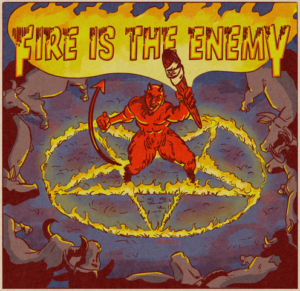
Myth: Fire is the enemy
Fires play a crucial role in maintaining thriving grasslands around the world. So why is fire so often portrayed as a wholly destructive force?
The story of fire as a gift stolen from gods and given to humanity is a theme across world folk traditions. As with the Greek story of Prometheus, the story of the gift of fire is often interpreted as representing the transformative acquisition of knowledge, technology and power. Through the burning of fossil fuels, fire has powered the expansion of global value chains and the modern systems and institutions that sustain them, even as it has driven profound consequences for life on earth.
Fire has been our companion as both a creative and destructive force through our existence as a species. Fires warm, cook, illuminate, reveal, and transform. Fire burns away solid things, making them into ash and air. Fire, natural and through human use, has shaped the evolution of our bodies, our cognition, the landscapes we call home and the livelihoods of rangeland communities. Fears of fire, however, continue to create problems for rangeland management.
A one-sided view
Despite its important role in maintaining healthy rangelands in many parts of the world, a one-sided view of ‘fire as the enemy’ has led to blanket fire suppression policies and popular education campaigns in many countries. While fear of wildfires is well justified, too often we see misguided narratives that conflate different types and uses of fire, and stigmatize, sanction or even criminalize the use of fire by farmers and pastoralists in the name of environmental protection.
A counterpoint to these narratives is the growing evidence from researchers studying the effects of fire in open canopy ecosystems, and the ways pastoralists themselves use fire in rangeland management. The evidence demonstrates the complex and often generative interactions between fire, vegetation and climate.
In this essay, we argue that a one-sided view of fire, based in the widespread fear of its destructive potential, can distract from understanding the crucial role of fire in maintaining flourishing rangeland ecologies and livelihoods. In places where this one-sided view dominates, ‘evidence-based policy’ remains more of an aspiration than a reality.

Fire and loathing
Today, fire is widely feared and often demonized. It is represented by media, in policy, and popular discourse as a destructive force linked to everything from deforestation and biodiversity loss, air pollution and public health threats, property damage and loss of life, to the greenhouse gas emissions that fuel climate change.
To understand this fear, one need only look to the catastrophic wildfires that have once again become part of the international news cycle. In July of 2026, wildfires raged across Canada and the US west, forcing the evacuation of entire towns, and an estimated 300,000 people have been displaced by wildfires in Spain, Italy and France. In 2025 wildfires in places including the Eastern Cape in South Africa were associated with human and livestock deaths, negative impacts on the environment, property loss and high economic costs.
Considering the high toll that wildfires take, the fear is understandable, but it tells an incomplete story. Blanket fire suppression in response to fear overlooks the crucial fact that fire is an important tool in maintaining ecologically complex and biodiverse grassland and woodland environments that are the basis of agro-pastoralist livelihoods. This requires us to look in more detail at how fire is used intentionally.
Fire in rangeland ecology and management
People manage landscapes through various forms of fire use, which operate on multiple spatial and temporal scales globally. Sub-Saharan Africa is sometimes called the ‘fire continent‘, accounting for an estimated seventy per cent of the area burned worldwide each year. While this may sound shocking, fire – both natural and human-directed – has been a critical ecosystem driver in the region’s grassy biomes (including grasslands, savannas, and fynbos) for millions of years.
Nearly ninety per cent of the annual burned area in sub-Saharan Africa occurs in grasslands and savannahs. This is because grassy (or shrubby) biomass – fuel able to carry fire – produced in the annual wet season becomes increasingly flammable with the progression of the dry season. In these landscapes, frequent, low-intensity ground fires naturally maintain plant biodiversity and prevent the encroachment of woody plants.
While the intensity and extent of fire used to manage rangelands depends on the specific management conditions, external factors must be accounted for as well. For example, longer cycles of drought and high rainfall (e.g., El Niño and La Niña) also influence fire intensity and frequency. The current El Niño cycle, following a number of years of above-average rainfall in southern Africa, is likely to generate significant fire activity. Historically, lightning has always been a common source of natural ignition, though today people are the most common starters of fires.
When used as a landscape management tool, carefully managed burning recycles nutrients back into the soil, and creates conditions that support new plant growth, sequester carbon naturally in soils, and maintain habitats for a wide range of plant and animal species. It improves the quality, nutritional content and tastiness of grass for grazing, benefiting livestock and agro-pastoralist livelihoods. Perhaps most importantly, regular controlled burns reduce the build-up of dry vegetation that acts as fuel, which lowers the risk of disasters caused by larger, more destructive wildfires.
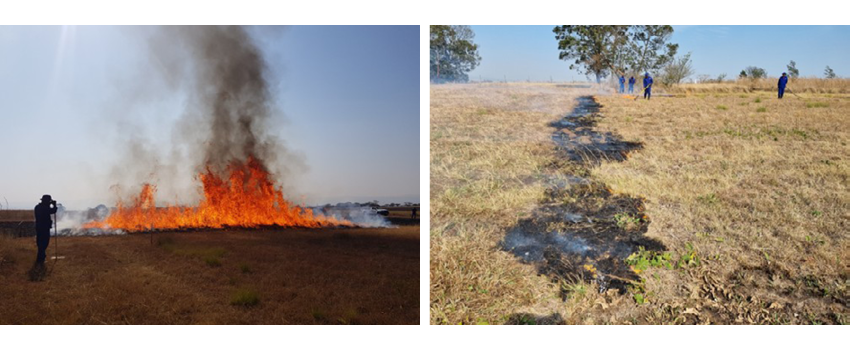
‘Hot’ and ‘cool’ controlled fires on the same experimental burn site
Colonial roots
The origins of fire myths can be partly traced to colonisation. In many Southern and Eastern African countries, including South Africa and Madagascar, the introduction of fire suppression policies under colonial governments was backed by anti-fire polemics: these presented local landscape management practices involving fire as destructive, a leading cause of deforestation and environmental degradation.
Fire management in Madagascar has historically been shaped by a legacy of exceptionally strong fire suppression inherited from French colonial authorities. It is somewhat comparable to the discourse on fire ecology in South Africa perhaps 30–50 years ago, before research increasingly demonstrated the importance of fire as a natural ecological process. Unsanctioned use of fire remains criminalized, despite growing demands for recognition of the role that fire plays in maintaining Madagascar’s landscapes, livelihoods and rural culture.
Such strong and authoritative anti-fire attitudes are at odds with both the findings of research and the ongoing realities of widespread use of fire in landscape management. This creates tensions and conflicts over how fire is understood and makes it a socially sensitive topic, which can lead to the uncritical reproduction of official narratives and the perpetuation of stigma against agro-pastoralists.
How fire is portrayed
In both countries, media coverage continues to portray fire almost exclusively as a destructive force, emphasizing the damage it causes while overlooking its important ecological, economic and cultural roles. Reports commonly describe thousands of hectares of grazing area or vegetation as being ‘destroyed’, a term that implies permanent loss rather than the temporary reduction in vegetation that is then followed by regrowth after the rainy season.
This is particularly misleading in fire-adapted ecosystems such as South Africa’s fynbos, where news reports frequently state that vegetation has been destroyed – despite the fact that many fynbos species depend on periodic fires for regeneration and long-term survival. These media framings reinforce perceptions by policymakers and members of the public that fire is always harmful, rather than recognizing that, in many ecosystems, it is necessary from both an ecological and economic standpoint.
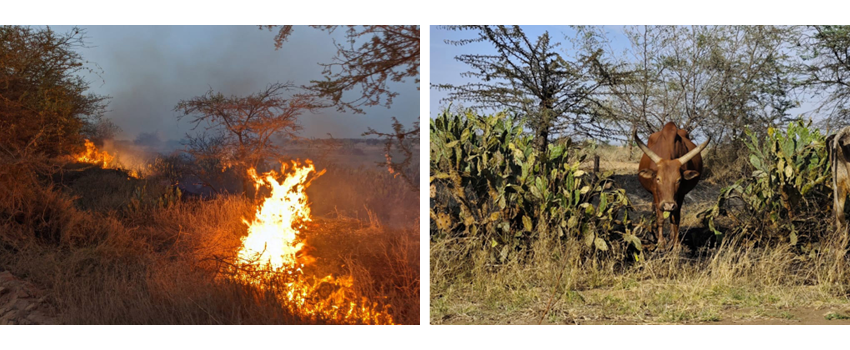
In Madagascar, raketa (prickly pear) is burned to make it accessible to zebu
Climate change goals also play a role. In both countries, the expansion of carbon markets and a common assumption that ‘trees are always better for carbon’ creates further barriers to appreciating the ecological importance of fire in grasslands, and even the importance of grasslands themselves. The focus on trees overlooks the fact that many grassland ecosystems naturally store large amounts of carbon below ground and depend on regular fire to maintain this and other ecological functions. Suppressing fire to encourage tree growth can therefore unintentionally undermine natural carbon storage and the broader ecological processes that achieve it.
Received wisdoms
Geographer Christian Kull uses the term ‘received wisdom’ to describe a type of myth that persists and shapes a field of discourse on a topic, despite potential flaws or weaknesses, or in the face of contrary evidence. The received wisdom that fire is the enemy of nature, a threat to ecology, livelihoods and development, is often reproduced in contemporary efforts to suppress fire, and this is dangerous.
State of the art research outputs are sometimes deliberately ignored. The notion that fire is the enemy neglects a large and growing body evidence from ecologists, landscape historians, social scientists and communities of place on the importance attention to questions of ‘pyrodiversity’ – the variability in fire effects and fire regimes across a landscape and over time.
The variables include frequency, severity, size, seasonality, and the spatial arrangement of fires, as well as the roles and interplay of natural and human aspects of fire regimes in shaping landscapes, maintaining ecosystems, enhancing biodiversity and sustaining agrarian livelihoods. In other words, not all fires are the same, and the differences matter.
Are attitudes changing?
While attitudes toward landscape burning have shifted somewhat in South Africa, much of its national fire legislation remains biased by anti-fire rhetoric and continues to ignore fire’s importance in maintaining grassy landscapes. Rather, fire policy is biased in favour of protecting plantations of exotic trees (pine, gum and wattle), which puts limits on the timing of fires, with permitted times that frequently fall outside the optimal window for farmers to burn grassland.
In Madagascar, there are signs that some people’s attitudes towards fire management might be shifting in a positive direction. For example, the Sustainable Management for Future Generations in Madagascar (FMH) project implemented the first preventative prescribed burns in central Madagascar, marking an important step towards integrating controlled fire into conservation practice. This transition indicates an as-yet-unrealized potential to move away from blanket fire suppression, towards evidence-based fire management that seeks to reduce the risk of destructive wildfires while maintaining ecosystem health.
Fanning the flames
Effective fire management should focus on using the beneficial aspects of fire while limiting its harmful impacts and preventing catastrophic events. Scientists and land managers already have access to extensive knowledge of fire behavior: they know where fires are most likely to occur and when they are most likely to burn, and technology can help inform management decisions. Practical strategies, including the creation of firebreaks, prescribed burning, grazing to reduce fuel loads, and the control of invasive alien plants, can all reduce the amount of combustible material available.
Combined with existing expertise in fire ecology and land management and the situated management expertise of livestock farmers themselves, these tools mean that many extreme fire events can be prevented, while the ecological, economic and cultural benefits of using fire can be maintained.
Despite all this knowledge, major barriers still exist. Ultimately, the received wisdom that ‘fire is the enemy’ is dangerous because it neglects the fact that fire is an eminently political and ideological thing – in addition to being about ecology and management.
Arguments about fire also spill over into wider issues: anti-fire polemics continue to shape global debates and contestations about landscape management and disaster risk reduction. They fan the flames of social conflict around many other intersecting issues, including landscape governance, ecological knowledge, climate change mitigation, conservation and landscape restoration.
 Want to discuss myths about fire? Join our seventh rangeland myths online conversation of 2026, on the myth that ‘fire is the enemy’, on Tuesday 25 August from 11:30 – 13:00 (UK time).
Our speakers are Kevin Kirkman and Elliot Convery-Fisher, and the discussion will be co-chaired by Amber Huff and Bat Maria Vorontsova.
We warmly invite anyone with an interest in rangelands, pastoralism and myths about them, to join, share your stories and rethink how we ‘see’ rangelands and pastoralism.