

Mpondoland / Wild Coast
Mpondoland and the Wild Coast comprise a region of complex and varied landscapes, with important cultural histories that remain relevant today, in the face of challenges from industry and development.

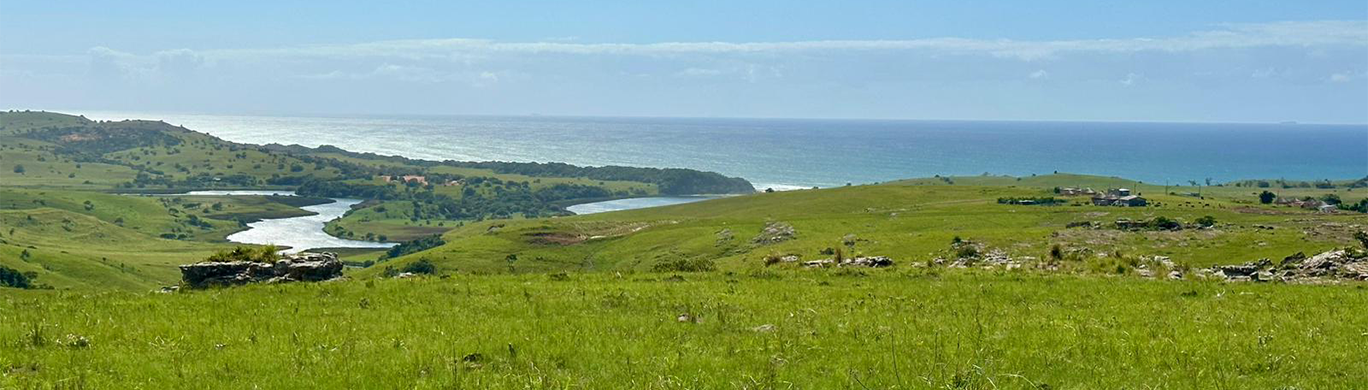
Mpondoland is divided in two by the Mzimvubu river, which runs down to Port St. John’s on the coast of the Eastern Cape of South Africa. The Msikaba Formation is a rock feature that cuts mainly through eastern Mpondoland and separates a big coastal plain from more mountainous areas heading up into the middle catchments of the Mzimvubu. This river, along with the Mzamba, Mtentu and Msikaba rivers, has carved deep gorges into the landscape.
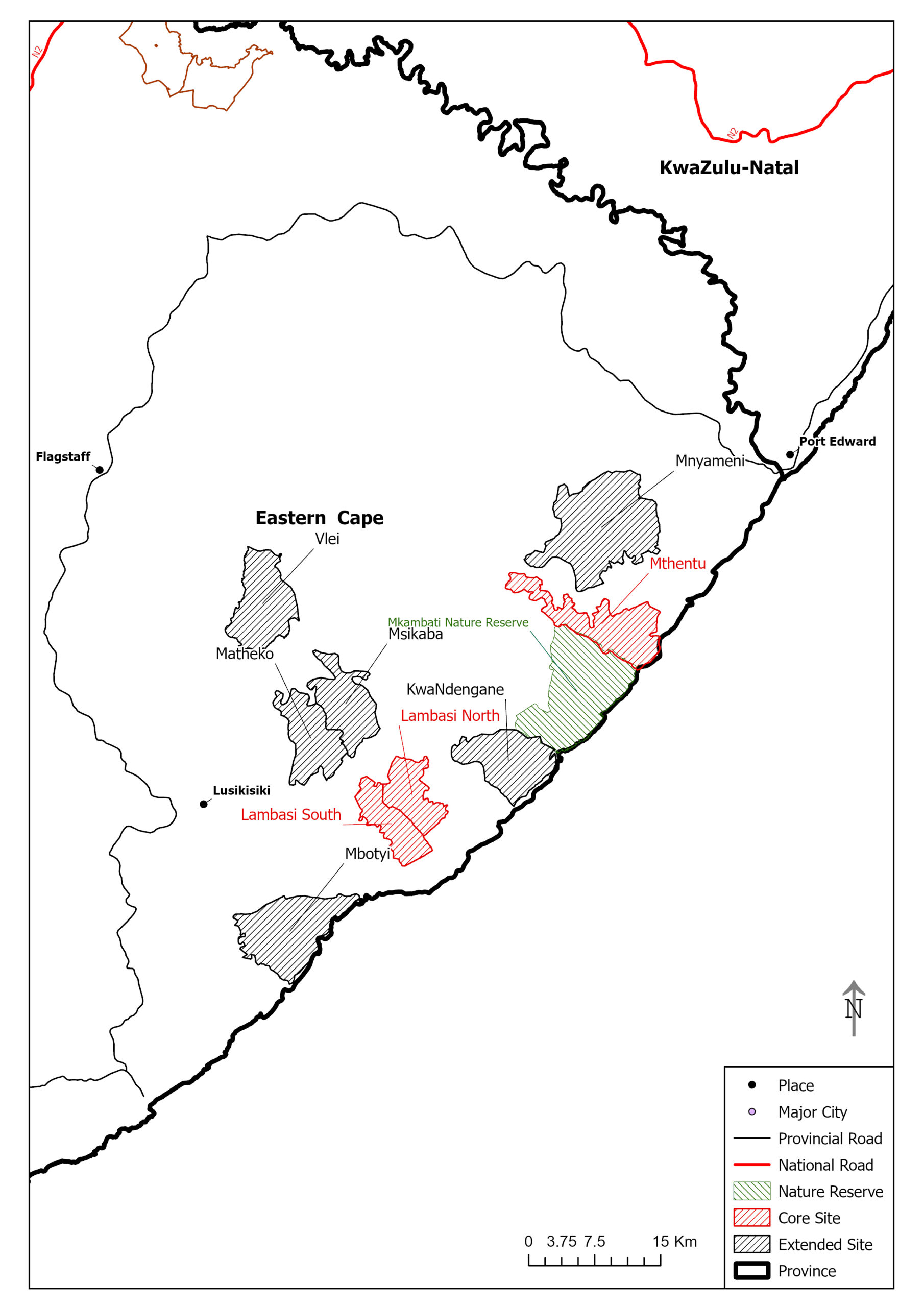
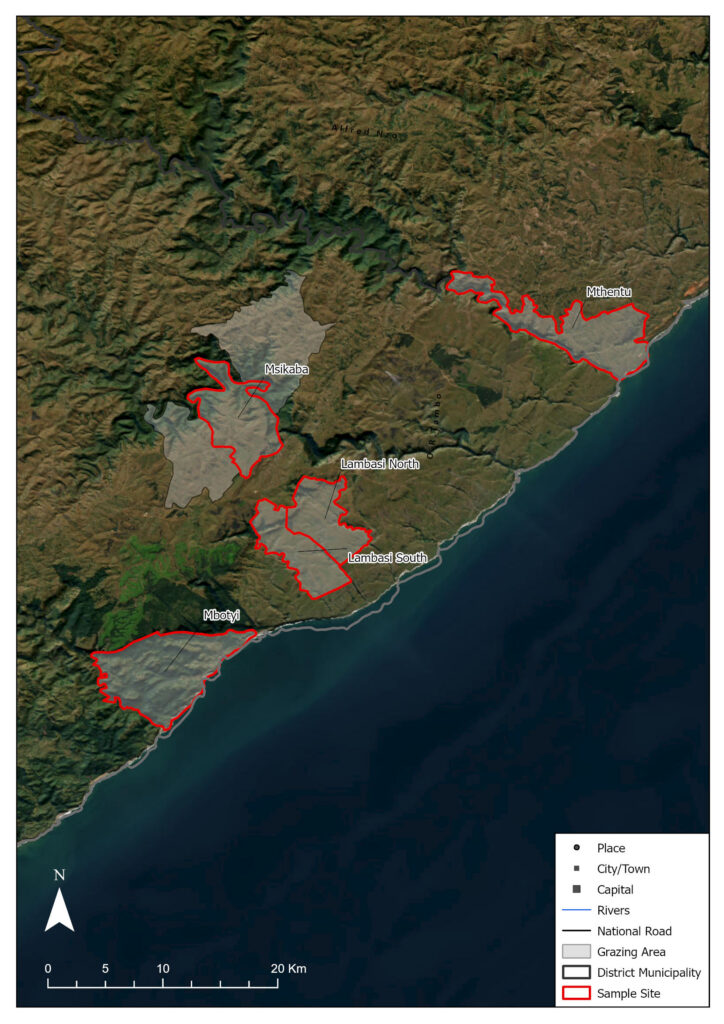
Research sites in Mpondoland (click for larger size). Maps: Brice Gijsbertsen
History and migrations
Historically, this difficult terrain has been helpful to the autonomy of the area. It afforded a degree of separation from the surrounding country, and during times of colonisation, has allowed authorities and community structures to meet would-be colonisers more on their own terms than in some other places.
Mpondoland has also been impacted by migration, including the Mfecane (movements of Zulu people into the area, especially on the eastern side) during the colonial encounter and related to the displacements of different groups by King Shaka Zulu during the consolidation of the Zulu Kingdom. This history has fed into a strong cultural tradition around resistance and autonomy.
Economic activity in Mpondoland
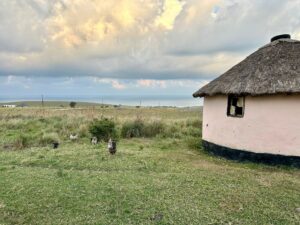 Mpondoland and the ‘wild coast’ is a popular site for eco-tourism, and is also a strong site of peasantry, with a great deal of farming and large numbers of livestock.
The culture of autonomy is also reflected in farming practices, with levels of self-herding that are unusual in other regions. Strong community bonds and a sense of solidarity inform how land and livestock are managed, and there is pride and experience in practices such as collective grazing and fire regimes.
Mpondoland is integrated, to some degree, into the economies of the Eastern Cape as well as those of KwaZulu-Natal. This is less so for beef value chains, but more so for value chains in horticulture and sheep.

Biodiversity
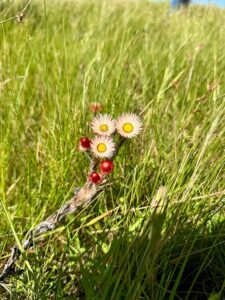 Mpondoland is a biodiversity hotspot. It includes many interacting grassland types and a high level of biodiversity, with different conditions and ecological settings relatively close to one another.
It appears that the rangeland is relatively healthy in general, due in part to the presence of wetlands and areas that hold large amounts of water, in particular on the coastal plains – although the picture is different in the rocky, more mountainous parts of Mpondoland.
There are significant ecological and livestock farming challenges. These are mainly linked to the deterioration of the condition of the grassland. In this area, the growing abundance of the unpalatable Ngongoni grass (Aristida junciformis) affects biodiversity and the potential for livestock production.
Promises and threats
Mpondoland is now a place of (potential) transition.
More recently, the narrative of the Wild Coast as separate, autonomous and untouched is being challenged. Threats from mining in Xolobeni and parts of the Wild Coast, as well as discussions of a large ‘smart city’, are coupled with a project to extend the N2 Wild Coast toll road. The region’s dramatic landscape and difficult terrain, cut through with rivers and gorges, means that national provincial roads have had to detour a long way around: a distance of 20km (as the crow flies) can take three or four hours by car. The N2 project seeks to cut straight through some of the landscape.
People on the coastal plain around Amadiba are resistant to mining in their area and to offshore oil and gas exploration. They hope for the road to be further inland to protect local biodiversity and livelihoods, while still retaining greater physical integration with the region. Others around Lambasi, particular those in leadership roles, seem more welcoming of the road.
But any new mega-infrastructure is always contested, and the culture of Mpondoland lends itself to resistance, and so struggles continue – as does the reproduction of the region’s agro-ecological livelihoods, of which rangelands and livestock are a key component.
Photos: Amber Huff