

1 June 2026 Jeremy Allouche & Linda Pappagallo
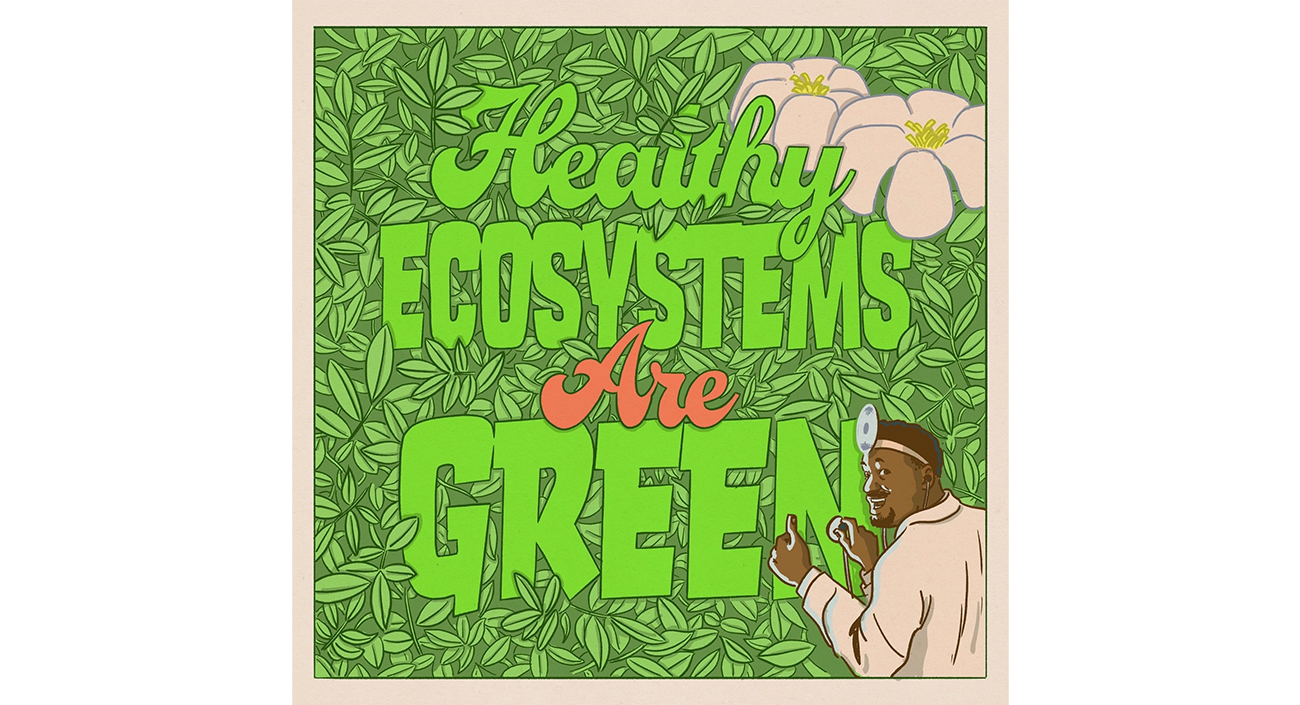
Myth: ‘Healthy ecosystems are green’
The idea that ‘green’ ecosystems are automatically more healthy is based on a long history of assumptions about nature.
Modern narratives of ‘desertification’ frequently invoke science and technical know-how, but in fact they have a strong ideological dimension, based on the myth that ‘healthy ecosystems are green’. These narratives have often been critiqued for misunderstanding how rangeland and dryland ecosystems change. But the role of monochromatic aesthetics – and how they seep into language and ideas – have been less central to these critical analyses.
The preference for green is an aesthetic claim about what counts as nature, productivity, and care. It is associated with ‘hospitable nature’ and healthy ecosystems. In Islam it symbolizes paradise, life, renewal, peace, and the Prophet Muhammad’s favour. Meanwhile, inhospitable, dead ‘wastelands’ are often represented with hues of brown. Drawing on fear and contempt, the Latin term desertus becomes ‘wasteland’ in early English translations of the Bible, referring to spaces of desolation, isolation, and wandering.
The association of green with biodiversity and brown with ecological homogeneity, contributes to unitary images of deserts as empty landscapes devoid of what we call ‘biodiversity’, despite the many forms of life that are sustained by dry landscapes. Why do these ideological-aesthetic associations persist, and what do they erase ecologically and politically? How can we build more accurate narratives of dryland environments?

The aesthetic myth cluster: ‘green = healthy’, ‘brown = degraded’, ‘desert = empty’
The assumption that ‘healthy ecosystems are green’ frames vegetation density, chlorophyll and tree cover as accurate proxies for ecological value, while brown, sparse or highly seasonal landscapes are often read as damaged, unproductive or ‘in need of restoration’. Greening becomes synonymous with restoration, emphasizing balance, the innate, and the primal. For example, greening to ‘combat’ spreading deserts has long shaped development policies and large-scale interventions like green wall initiatives in the Sahel, North Africa and China.
The green-as-health equation travels easily into popular environmentalism, from policy slogans (e.g. green transitions or green cities), to climate and development finance (green bonds), to everyday living (green tourism, ways to live green) and marketing strategies (green fuel).
We know that drylands are defined by variability, patchiness, disturbance through fire and grazing, and long periods of apparent barrenness. But many of us cannot help but put on the ‘green lens’, contributing to misreading dryland ecologies.
Let’s take aridity, most simplistically considered as a state of less than 200mm of annual rainfall – below which various definitions of dryland ecosystems exist, including deserts. Aridity lines, drawn on a map, define fixed boundaries between desert and conventionally arable land. Although we know that these may move seasonally as temperatures and rates of evaporation change (as aridity indices hope to capture more accurately), aridity lines have become fixed boundaries, frontiers, used for strategic policy.
Eyal Weizman, in The Conflict Shoreline, finds that plotting the location of Western drone strikes on meteorological maps demonstrates an astounding coincidence: attacks focus directly on or close to the 200 mm aridity line. Embedded in the rhetorics of these conflict zones we find discourses of empty deserts and degradation. This is why, as Elizabeth Povinelli argues, the desert is crucial to understanding contemporary formations of power, because it stands for discourses and strategies that seek to re-stabilize the difference between life and nonlife.
All places are to one extent or another rhetorical constructions, but deserts are especially interesting because they embody the ‘wasteland aesthetic’ which has been so present in modern literature, psychology, philosophy and religion,.
Where do desertification narratives originate from?
A timeline of the international framework to combat desertification is a good place to start to understand where desertification narratives originate from and how they have transformed. Global concern on desertification is most commonly dated to the 1970s, when drought and famine hit the Sahel region with spectacular suffering and mortality that led to the United Nations Convention to Combat Desertification (UNCCD). But fear of invasive deserts has driven global dryland policy for much longer, influenced by older, mostly Anglo-French ideas about forests, climate, and ‘proper’ land use.
For instance, French foresters developed the pseudoscientific idea that ‘civilised nations’ required a certain level of forest cover. This idea morphed into seemingly technical claims about overgrazing, burning, and deforestation as primary drivers of desert expansion. One of the ironies of the colonial system has been the forceful production of cash crops like cotton which has in fact greatly contributed to land degradation.
This colonial ideology led to the development of the widely influential theory of desiccation that identified humans as the primary agents in the process. For instance, the French colonial forester Louis Lavauden, while working in southern Tunisia, declared in 1927 that “desertification … is purely artificial. … It [is] caused uniquely by human action”. These colonial narratives around human mismanagement were also associated with neo-Malthusian perspectives. The British forester Edward Percy Stebbing, in his lecture to the Royal Geographical Society in 1937, declared: “in this region the population is actually increasing whilst the means of supporting it are obviously and visibly decreasing”.
One of Stebbing’s ideas was a precursor of the Great Green Wall. During the same lecture, he proposed to reserve two parallel forest belts through the French and British colonies to stop the progress of the Sahara, belts which should be 15 miles deep and 1,370 miles long. These two belts would be closed and protected from farming, fire and grazing.
These narratives were reinforced by institutional practices: forestry departments, mapping exercises, and later international organizations that needed legible indicators and scalable solutions. Over time, the story of ‘desertification’, and in similar ways that of degradation, reinforce the need for intervention.
Restoration and development storytelling through the ‘green’ aesthetic
The desertification story is reproduced not only through technical reports but also through powerful cultural forms: photographs of dunes, cartographic maps, satellite-based analyses and before/after greening images; and the broader modern association of ‘greening’, not merely with land-management activities, but an ideological-aesthetic claim about what counts as care, such as the act of planting trees – lauded as an almost religious gesture.
In 2011 the United Nations’ Bonn Challenge proposed that 350 million hectares of land would be ‘restored’ through tree planting by 2030. The AFR100 initiative, funded by multiple international donors including the World Bank, has committed to afforesting 100 million hectares in Africa over the coming decade.
The Great Green Wall (GGW) in Africa is one version of these greening initiatives, resurrected from its colonial past by Olusegun Obasanjo, the then president of Nigeria, at the 7th summit of the leaders and Heads of State of the Community of Sahel-Saharan States (CEN-SAD). The project’s original vision included an 8,000 km ‘green belt’ of trees, but this proved ecologically impractical for arid regions with 100–400 mm annual rainfall. Instead of a continuous ‘wall’ of trees, the GGW was therefore redesigned in the form of a mosaic of patches that combine sustainable land management (SLM) practices, integrating agroforestry, soil conservation, and rural job creation.
In its latest form, the GGW is presented as a Pan-African movement. Launched in 2007, the GGW is supposed to embody the symbol for Africa’s fight against an ‘expanding’ desert. Visible from space, the symbolism is dramatic: a green wall reversing environmental degradation and its perceived socio-economic vulnerability; quelling insurgency and conflict, while stemming the flow of migrants.
At the One Planet Summit of January 2021, world leaders announced $16bn of support for the GGW over five years. This is a significant expansion of funding, with calls for greater focus on afforestation, reforestation and revegetation (ARR) activities. Today, the GGW is branded as Africa’s flagship environmental restoration programme, targeting 100 million hectares of restored land, 250 million tons of sequestered carbon, and 10 million green jobs by 2030.
The ‘Green Wall’ is now becoming an umbrella term, almost like a brand, encompassing many development projects managed by different international organisations and international NGOs. Apart from the brand identity, these projects do not share much in common in terms of objectives. The massive financial commitment at the One Planet summit means that the project is attracting other countries: an additional 20 countries across the African continent all wanted to join the efforts to combat land degradation and improve sustainable landscape management.
A banner from the UNCCD website (fair use)
The Green Wall concept travels and expands even beyond arid and semi-arid areas because large interventions like green walls offer what many institutions seek: a geographically bounded project, an easily communicable crisis (“the desert is advancing”), and measurable outputs (seedlings planted, hectares ‘restored’). This can align with donor reporting requirements and with state interests in territorial legibility and control. But the very features that make the narrative effective can also be what makes it dangerous: when success is measured through tree counts, the project can sideline questions of water, maintenance, land tenure, and mobility.
Green walls are constructed from an agrocentric perspective that see arid ecosystems as degraded socio-territorial systems. Such walls are misdirected by green-centred tropes, incapable of recognising nomadic territorialities (where movement rather than enclosures are central, for example). This helps explain why ‘Green Wall’ narratives continue to obscure dryland ecologies, yet remain compelling: they promise a visible linear repair to what is imagined as a linear process of decline.
Countering simplistic ‘green’ narratives
Greening obscures dryland political ecologies but given the power of narratives about desertification and its solutions, what alternative storylines exist, and what would happen if we explored them?
The desertification myth, and greening as a way to counter desertification, are powerful ideas because they can quickly legitimize new rules about which livelihoods are deemed ‘good’, and what kinds of landscapes count as ‘properly managed’. The myth that ‘healthy ecosystems are green’ can travel as a technology of blame.
But countering this myth does not mean denying environmental change. Instead, we propose that desertification should be better situated historically and politically. Literature and landscape studies have helped situate greening narratives as part of the colonial and capitalist discourse: from powerful political catchphrases for colonial projects such as ‘making the desert bloom’, to deserts seen as valuable only for mineral extraction, military experimentation and photovoltaic parks. Brahim El Guabli, a Comparative Literature scholar, talks of Saharanism, as racializing and extractive imaginary that operates across deserts.
Another approach is to is to widen the evidence base: to combine dryland ecology (including non-equilibrium perspectives) with environmental history, political ecology and the environmental humanities. In policy terms, this reframing tends to shift priorities from symbolic greening toward questions of governance, water, rights, maintenance, and locally negotiated landscape heterogeneity.
Together, these approaches might help challenge myths of desertification and ‘greening’, and share a more rounded (and grounded) understanding of the value, dynamics and diversity of rangelands and deserts around the world.
 Want to discuss myths about ‘green’ ecosystems? Join our sixth rangeland myths online conversation of 2026, on the myth that ‘healthy ecosystems are green’, on Thursday, 17 June from 13:00 – 14:30 (UK time).
Our speakers are Brahim El Guabli, Igshaan Samuels and Mmoto Masubelele, and the discussion will be co-chaired by Jeremy Allouche and Linda Pappagallo.
We warmly invite anyone with an interest in rangelands, pastoralism and myths about them, to join, share your stories and rethink how we ‘see’ rangelands and pastoralism.
Further reading
Lie of the Land: Challenging Received Wisdom on the African Environment (African Issues) by Robin Mearns, edited by Melissa Leach
The Desert in Modern Literature and Philosophy
Desert Imaginations by Brahim El Guabli – Hardcover – University of California Press
Deserts Are Not Empty | Columbia University Press
Benjaminsen, T. A., & Hiernaux, P. (2019). From desiccation to global climate change: A history of the desertification narrative in the West African Sahel, 1900-2018.Global Environment, 12(1), 206-236
Bond, WJ, Stevens, N, Midgley, GF & Lehmann, C (2019), The trouble with trees; afforestation plans for Africa, Trends in Ecology & Evolution, 34 (11), 963-965.
Cohen, J. J. (Ed.). (2013). Prismatic ecology: Ecotheory beyond green. U of Minnesota Press
Davis D. K. (2016), The Arid Lands: History, Power, Knowledge, Cambridge: MIT Press
Davis, D. K., & Robbins, P. (2018). Ecologies of the colonial present: Pathological forestry from the taux de boisement to civilized plantations.Environment and Planning E: Nature and Space, 1(4), 447-469
Lavauden, L. (1927) Les Forêts du Sahara, Revue des Eaux et Forêts 65 (6): 265–277 and 329–341, 267
Macia, E, et al. (2023) “The Great Green Wall in Senegal: questioning the idea of acceleration through the conflicting temporalities of politics and nature among the Sahelian populations.” (2023), Ecology and Society 28(1):31
Nicholson S. E. (2011), Dryland Climatology, Cambridge: Cambridge University Press.
Pédarros, É. et al. (2024) The Great Green Wall as a Social-Technical Imaginary, IDS Working Paper 602, Brighton: Institute of Development Studies, DOI: 10.19088/IDS.2024.017
Read more
The REPAiR Project blog brings diverse views from our project team and collaborators into conversation around key themes and ideas.
28 April 2026 Linda Pappagallo
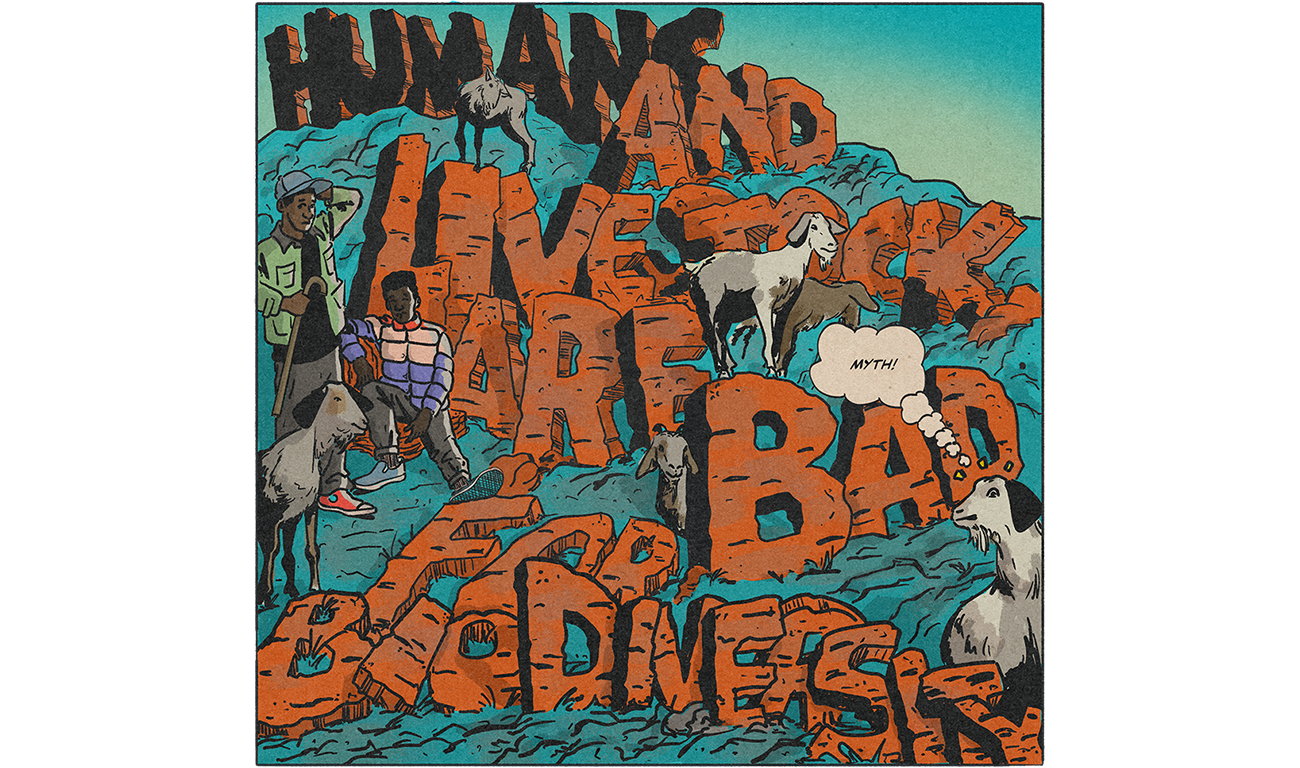
Myth: ‘People and livestock are bad for biodiversity’
Beyond myths based on stories of lost Paradise or a romantic wilderness, there are diverse ways of seeing the relationships between humans, livestock and wildlife.
27 December 2025 Amber Huff & Linda Pappagallo
Rethinking what we think we know about rangelands and pastoralism
In this introductory blog on ‘rangeland myths’ we emphasise the need to rethink what we think we know about rangelands and pastoralism in ways that are open to diverse perspectives, experience and knowledges.