

14 August 2026 Livasoa Randriamanalina
Pastoralism and the Future of Rangelands – reflections from IYRP in Madrid
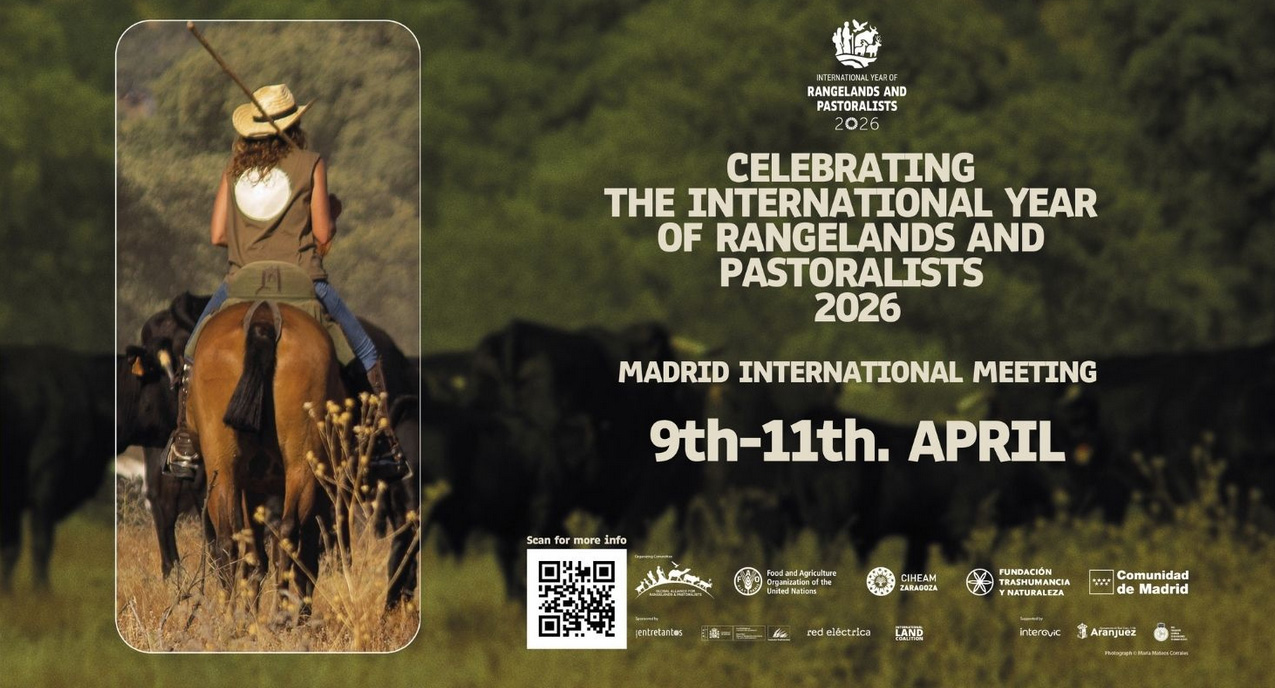
From April 7–12, 2026, I travelled to Madrid to attend the International Meeting of the International Year of Rangelands and Pastoralists (IYRP 2026). The event brought together pastoralists, researchers, NGOs, policymakers, and activists from across the world. The central theme was the recognition of pastoralism as a sustainable, adaptive, and knowledge-rich system that remains highly relevant in the face of climate change and socio-economic transformation.
The central question was simple yet profound: How can pastoralism remain viable in a world facing climate change, land pressures, and rapid social transformation?
My aim was to explore how pastoral communities worldwide are adapting to contemporary challenges, and to connect these global insights with the realities of Madagascar’s pastoral systems.
The conference was an unforgettable experience: a vibrant mosaic of voices where Maasai women from Kenya, young Indian herders, Mediterranean researchers, Latin American representatives, and European policymakers came together, bringing their stories, challenges, and hopes into a shared space. The sessions included over 400 people, half of whom joined online.
Alongside the main conference programme, cultural and practical demonstrations of sheep herding and other practices were organized in Aranjuez. Preparatory work for the Youth Pastoralist Declaration was carried out in Soto de Henares on April 8, where young pastoralists collaborated across languages.
I came to the conference with a few guiding questions:
How can pastoralism remain resilient and relevant in the face of climate change and social transformation?
What role do young people and women play in shaping the future of pastoral systems?
How can intergenerational knowledge transfer be protected and strengthened?
What policy frameworks and innovations are needed to ensure pastoralism is recognized as a modern, sustainable system rather than a relic of the past?
At the conference, I participated as a panelist in a session entitled ‘Traditional Knowledge, Indigenous Knowledge, and Social Innovation in Pastoralism’, where I presented the context of pastoralism in Madagascar. I exchanged perspectives with colleagues from Kenya, Niger, Hungary, Colombia and others, focusing on how communities transmit ecological knowledge and adapt to modern challenges.
I also took part in the Mediterranean livestock system workshop, which highlighted the challenges and pathways of pastoral systems in countries such as Egypt, Algeria, Turkey, Morocco, Tunisia, Mauritania, and Jordan. The discussions emphasized water scarcity, climate stress, and innovative solutions like bio‑economy, digital tools, and certification of pastoral products.
I attended sessions on value chains and entrepreneurship, hearing from speakers from Peru, Spain, Argentina, and India about how pastoral products (milk, handicrafts, native breeds) are reaching wider markets through innovation and digital platforms.
In the intergenerational dialogue panel, I listened to young pastoralists from South Asia, Africa, and Europe explain how they balance education with mobile livelihoods, and how knowledge transfer remains central to resilience. I also contributed to the Youth Pastoralist Declaration validation with the Youth Pastoralist Working Group, stressing youth inclusion, mobility rights, and recognition of pastoralism as a modern socio‑ecological system.
A living laboratory
During my time in Madrid, I observed intergenerational exchanges where elders taught weaving, livestock care, and ecological stewardship, while youth demonstrated digital mapping, GIS tools, and entrepreneurial initiatives.
In the Mediterranean livestock system workshop, I saw how countries like Egypt, Algeria, Turkey, Morocco, Tunisia, Mauritania, and Jordan are facing similar challenges — drought, land scarcity, and economic fragility — but also experimenting with innovative solutions such as bio‑economy, climate‑smart practices, and certification of pastoral products.
During the value chains and entrepreneurship sessions, I noted how women’s groups in Peru and Argentina presented dairy and wool products, while Spanish initiatives showcased native breeds and local branding strategies.
In the intergenerational dialogue panel, young pastoralists from South Asia, Africa, and Europe explained how they balance education with mobile livelihoods, emphasizing that mobility must be protected as a foundation of resilience.
At the cultural demonstrations in Aranjuez (April 11), I observed sheep herding with dogs, traditional sheep shearing, and pastoral music performed with flutes, tambourines, and drums. Exhibitions such as the Bestiarium displayed large portraits of Spain’s native breeds, highlighting the cultural heritage of pastoralism.
I also witnessed the presentation of the Youth Pastoralist Declaration, where young leaders from multiple regions emphasized that pastoralism is a system for the future, not the past, and called for recognition, rights, and inclusion in policymaking.
The conference felt like a living laboratory of pastoralism. Inside the halls, discussions focused on mobility, climate adaptation, intergenerational knowledge transfer, and innovation; outside, cultural demonstrations in Aranjuez showed sheep herding with dogs, traditional shearing, and music rooted in pastoral life.
The challenges were clear, including climate change, land scarcity, lack of legal recognition, and limited access to markets and services. Many pastoralists described how droughts, diseases, and urban expansion disrupt traditional migration routes. At the same time, people are trying to build solutions: protecting mobility corridors, integrating digital tools like GIS mapping, creating value chains for dairy and handicrafts, and pushing for gender‑responsive policies. Young people and women were especially highlighted as key actors for renewal.
From local realities to global movements
Participating in the Madrid conference was deeply meaningful because it allowed me to see pastoralism not only as a livelihood system but as a global framework for resilience, culture, and sustainability. For me, it confirmed that the challenges faced in Madagascar — land scarcity, climate stress, and the need to protect traditional knowledge — are shared across continents.
It mattered because I could contribute my own perspective as a panelist, while also learning from Mediterranean, African, Asian, and Latin American experiences. This exchange reinforced the idea that pastoralism is not a relic of the past but a modern socio‑ecological system with solutions for climate adaptation, biodiversity conservation, and food security.
On a personal level, it strengthened my conviction that youth and women must be central actors in shaping pastoral futures, and that intergenerational knowledge transfer is essential to keep these systems alive. It also highlighted the importance of policy recognition and legal protection. Without them, pastoral communities remain invisible and vulnerable.
Ultimately, this experience matters because it connects local realities in Madagascar to a global solidarity movement. It showed me that pastoralism is a system of hope, dignity, and innovation, and that supporting it is not only about protecting livelihoods but also about safeguarding cultural heritage and ecological resilience for future generations.
Possible futures of pastoralism
The conference showed that pastoralism is not a relic but a modern socio‑ecological system. It combines ancestral knowledge with innovation, and its resilience strategies — mobility, diversity of breeds, customary governance — are crucial for climate adaptation and biodiversity conservation.
Recognizing pastoralism matters because it sustains millions of livelihoods, protects ecosystems, and offers solutions to global crises. Without legal recognition, secure rights, and adapted services, pastoral communities risk invisibility and marginalization.
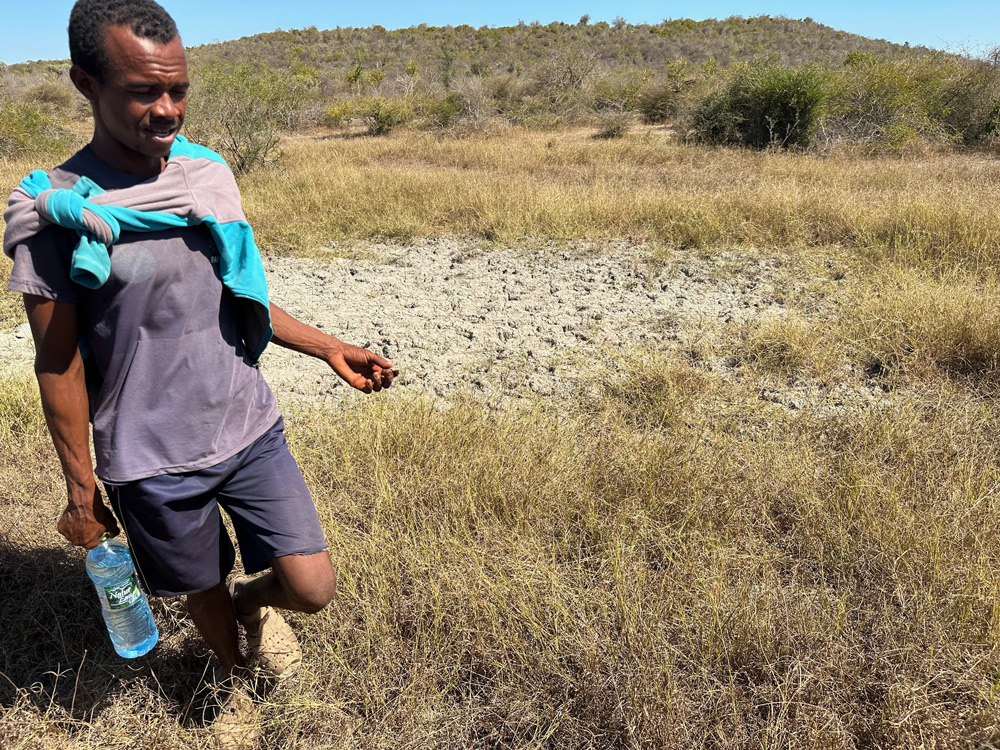
A long-term drought in southwestern Madagascar has affected water supplies for pastoralists
The lessons from Madrid resonate far beyond Spain. Countries in Africa, Asia, and the Mediterranean share similar challenges — drought, land scarcity, youth migration, gender inequality — and can benefit from the solidarity and innovations discussed.
For Madagascar, the parallels are clear: the mobility of zebu herds, customary institutions, and adaptation to dry seasons resonate with global pastoral debates. Yet the situation can be even more challenging, as limited recognition and support for pastoral systems risk pushing communities deeper into poverty, despite Madagascar’s vast potential for restoring and sustainably managing its rangelands.
What should happen?
Reflecting on the conference, a number of priorities are particularly relevant in this international year of rangelands and pastoralists.
Governments must recognize mobility and customary systems in law and policy.
Youth and women should be included in decision‑making and supported with dignified economic opportunities.
Knowledge rights must be protected so communities benefit from their innovations.
Investments in mobile services (education, healthcare, connectivity) are essential to match pastoral realities.
Pastoralism should be reframed globally as a solution for climate resilience and food security, not as a problem to be “fixed.”