

10 May 2026 Pablo Manzano
The misunderstood relation between biodiversity and pastoralism
We should question deep rooted assumptions about how pastoralists, livestock and wildlife can co-exist.

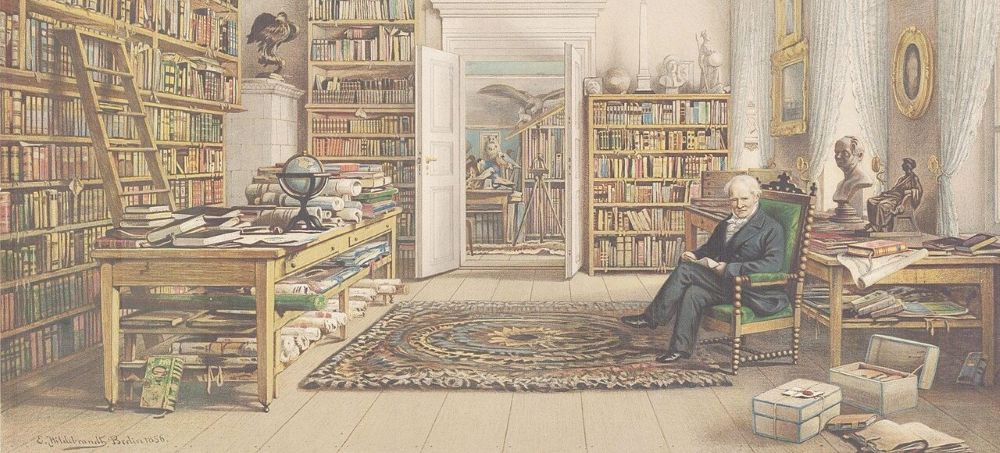
The conservation movement dates from 200 years ago, shaped by ideas on ‘nature’ conceptualized by Alexander von Humboldt, who envisioned an intact, ‘untouched’ concept of nature that rejected the role of disturbances in ecosystems.
Embedded in the time of Romanticism, with a clear influence of religious thinking that values divine, original values against sinful, human-created ones, these theories gained quick recognition. They have formed the base of Western popular cultural understanding of the most valuable conservation areas: pristine landscapes, free of – or freed from – human influence.
The ecological theory developed since the 1970s, however, has been debunking such visions. First was the understanding by Robert Whittaker that not all landscapes with enough rainfall and temperature to host a forest, actually host a forest. This was coupled with the development of resilience theories on alternative stable states, later further developed into radical ecosystem shifts when such stable states are present.
Michael Huston’s dynamic equilibrium hypothesis also contributed to understanding how both disturbance and productivity interact with each other to produce maximum biodiversity and ecosystem function at intermediate levels. Later, William Bond helped understanding how many of the world’s landscapes have ben sculpted by herbivory and fire.
In a nutshell, and after all this research, we know that disturbances matter, and that most ecosystems worldwide need to a large extent to be ‘touched’ by them, rather than remaining intact, if they are to preserve their biological communities and functions.
After megafauna
Accepting the role of disturbances in ecosystems immediately has implications for the role of humans in them. Mammalian megafauna, known to be fundamental in explaining the configuration of Open Ecosystems not dominated by closed-canopy forests, went extinct in most continents during the last tens of thousands of years. Africa and South Asia, the strongholds where megafauna resisted – likely partly due to co-evolving fear in the presence of humans – have functionally lost their megafaunal populations because they have been confined to just a handful of protected areas.
We are therefore living in a world functionally without megafauna, yet we do conserve the plant, insect and living communities suppressed by forest closure. How is that possible without humans?
While we need to advance research on the exact mechanisms on how it works, we know traditional human activities do conserve and promote biodiversity, concretely linked with adequate, positive disturbances. Among them, pastoralism is particularly effective. But a nuanced approach is fundamental, as we also know not all livestock is the same, with different practices having diverse environmental outcomes. It is fundamental to reflect on what makes livestock grazing positive.
Wild grazers
Let’s start with wild grazers. Beyond our ideological biases stemming from Romanticism, we know it is absurd to believe that a wild grazing animal is going to do good to nature, just because it is wild. Maybe the best example is Yellowstone National Park. The absence of large predators in the park caused elk and bison to graze undisturbed, entering into riverine areas and damaging the recruitment of willows that served beavers to build dams.
The reintroduction of wolves and the re-establishment of the so-called ‘landscapes of fear’ created a cascading effect that made the landscape change radically, not only by restoring riverine forest but also by multiplying beaver-mediated ponds. While the concrete effect of wolves in that change has since been debated, it conceptually shows how even a wild herbivore not subjected to artificial feed supplementation can ‘graze wrongly’, as elk and deer did prior to the reintroduction of wolves.
Livestock
Similarly, grazing livestock can also ‘graze wrongly’. Disruptive effects are varied, but they can start by feed supplementation that artificially increases the number of animals in the system, or the demand for fibrous material. This is known to have caused widespread land degradation in the Middle East and North Africa. Artificially high grazing livestock densities not only stem from feed supplementation: the so-called ‘improved pastures’ are often supplemented by mineral fertilization that greatly increases grass growth but selects for few very competitive varieties and displaces most pasture biodiversity, also triggering nitrogen pollution problems related to high animal densities.
Other problems stem from more subtle effects. The ecology of herbivore mammals tells us that there is a wide spectrum of herbivory types, from browsers to grazers, who vary not only in their physiology but also in their effect on vegetation. While browsers usually feed on standing biomass (leaves on trees and shrubs) and can therefore persist in landscapes where grass has dried out, grazers have to follow the green wave of the vegetation. This causes interesting ecological effects, such as the facilitation of pollinators and seed dispersal. Yet it also means that sedentary grazing livestock, even if not supplemented, will only produce an adequate environmental performance in rather humid areas.
Drier areas necessarily rely on mobility to match productivity and disturbance in space and time, following the fundamentals described by Michael Huston in the late 1970s. It is on grazers that human domestication has focused, for they take over most of the biomass in grazing ecosystems; intermediate feeders that tend towards browsing are only more relevant in settings where mobility is limited, such in small islands.
And not only mobility is important, but also the action of pastoralists, i.e. governance.

Why governance matters
Governance and traditional knowledge are crucial. Some conservationists think that pastoralism only performs a limited variety of ecosystem services, and substitutes a limited number of herbivores, because the species used by pastoralists are few. They ignore the extraordinary capacity of human culture and imagination to multiply and re-shape effects.
An example is the extraordinary wealth of knowledge of pastoralists on feeding interactions, but also the large combinations of few elements that result in a fascinating variety of pastoralist mobility types. We often don’t realize how fire, or kraaling, or an adequate and specific management of goats, can substitute the opening of woody vegetation caused by elephants that dominated all continents except Australia as little as 40,000 years ago. In many cases their action was quickly replaced by hunter-gatherer cultures and, later on, by pastoralists.
Seeing things differently
In summary, evidence from multidisciplinary science tells us that pastoralism and pastoralists can do a lot of good to the environment if they are allowed to operate as they did for many years. The main barrier for adequately understanding these issues is to use research scales that use more complex frameworks than usually applied.
If we increase awareness among policymakers, general public and also the academic community, we may reach the goal to have a general understanding of sustainability linked to livestock and their people.
About the author
Pablo Manzano is an Ikerbasque Associate Professor at the Basque Centre for Climate Change-BC3. A PhD Ecologist at the Autonomous University of Madrid, he does scientific research in ecology of grazed socio-ecosystems. Pablo Manzano is an invited speaker at our online event on 28 May 2026 to discuss ‘rangeland myths’ about biodiversity.
Featured image: Alexander von Humboldt in his library (Public Domain)
 Want to discuss myths about biodiversity? Join our fourth rangeland myths online conversation of 2026, on the myth of ‘people and livestock are bad for biodiversity’, on Thursday, 28 May from 11:00 am – 12:30 pm (UK time).
Our speakers are Pablo Manzano, Munib Khanyari and John Harold, and the discussion will be co-chaired by Rashmi Singh and Francis Masse.
We warmly invite anyone with an interest in rangelands, pastoralism and myths about them, to join, share your stories and rethink how we ‘see’ rangelands and pastoralism.
Read more
The REPAiR Project blog brings diverse views from our project team and collaborators into conversation around key themes and ideas.
Related content
28 April 2026 Linda Pappagallo
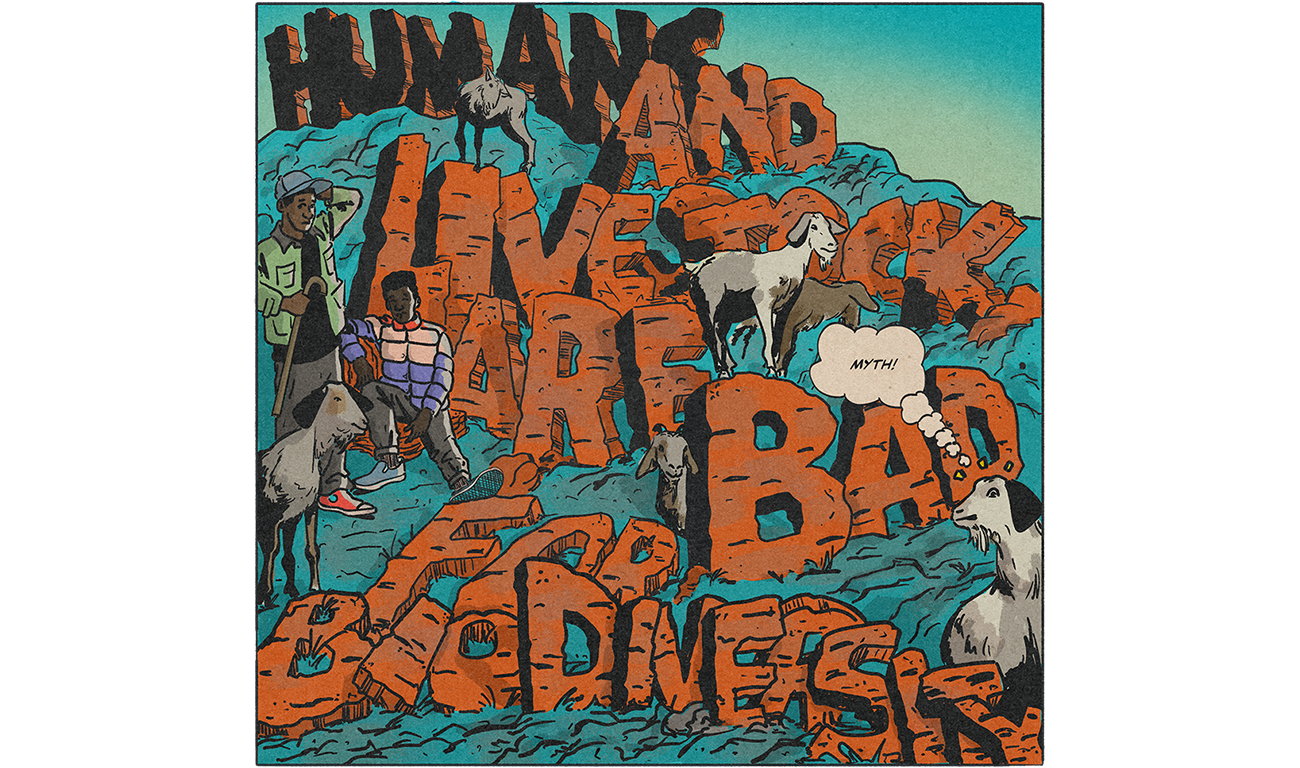
Myth: ‘People and livestock are bad for biodiversity’
Beyond myths based on stories of lost Paradise or a romantic wilderness, there are diverse ways of seeing the relationships between humans, livestock and wildlife.
8 April 2026 Amber Huff
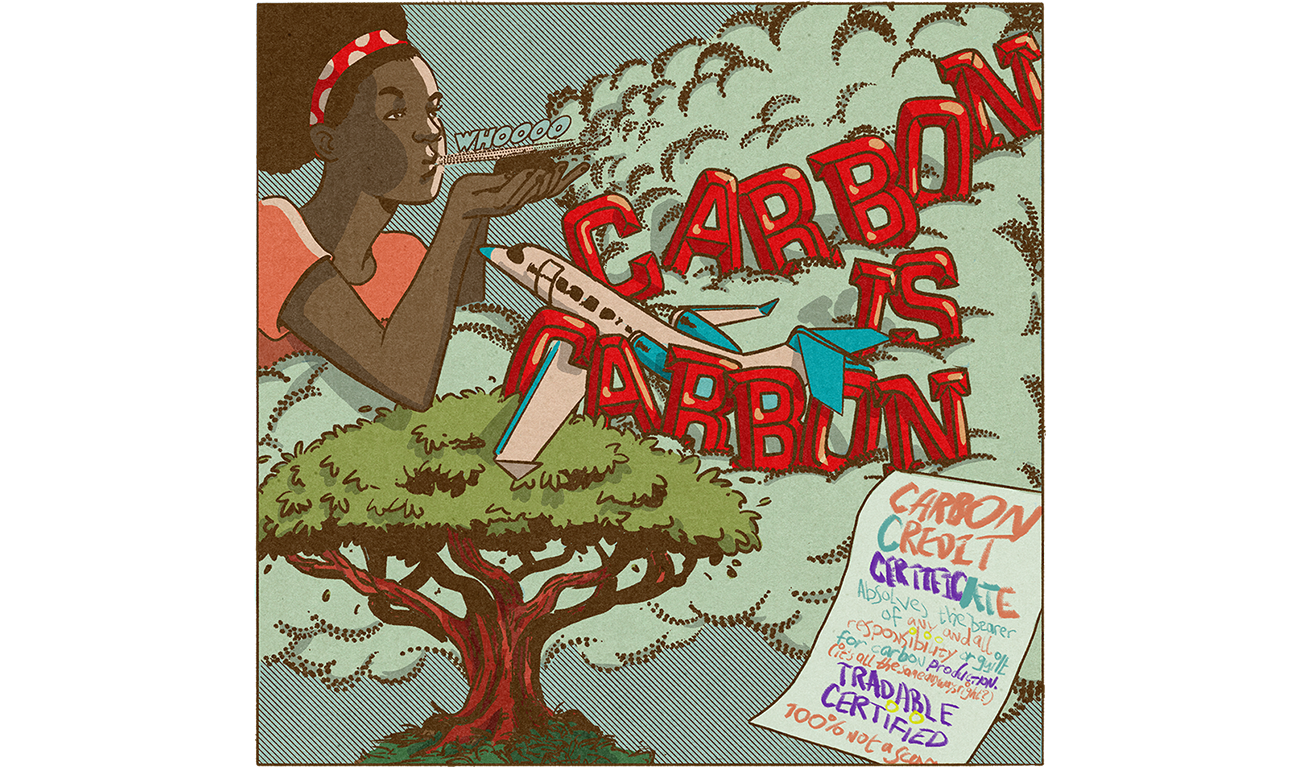
Myth: Carbon is Carbon
There is a powerful myth at the heart of global carbon markets: the deceptively simple idea that ‘carbon is carbon’.
9 January 2026 Amber Huff
Myth: The tragedy of the commons is inevitable
As the International Year of Rangelands and Pastoralists calls attention to the global diversity, importance, and governance of the world’s rangelands, the myth of the tragedy of the commons is particularly relevant and illustrative of the power and dangers of universalising and reductive myths.
27 December 2025 Amber Huff & Linda Pappagallo
Rethinking what we think we know about rangelands and pastoralism
In this introductory blog on ‘rangeland myths’ we emphasise the need to rethink what we think we know about rangelands and pastoralism in ways that are open to diverse perspectives, experience and knowledges.